
Roof Paint for South African Roofs That Need Colour and Protection
Roof paint is made for roofs that need more than a fresh colour. It helps protect concrete, fibre cement and many properly prepared metal roofs from sun, rain, dust and the day to day wear that comes with South African weather. In coastal areas like Gqeberha and Cape Town, the extra humidity and salt in the air can be hard on a roof, so the right coating matters.
This product is suited to homes, sectional title complexes, workshops, churches, schools and light commercial buildings. If the roof has faded, chalked or lost its even finish, a proper roof coating can improve the look and help extend service life. The key is correct prep, the right primer where needed, and a coating that suits the roof type.
Where Roof Paint Suits Best
Roof paint works best on sound surfaces that have been cleaned, repaired and prepared properly. It is commonly used on sloped and low pitch roofs, provided water is not ponding for long periods. For flat roofs or badly cracked areas, you may need to fix the substrate first before any coating goes on.
- Concrete tiled and fibre cement roofs with stable surfaces
- Pre painted or primed metal roofs in fair condition
- Outbuildings, garages and storerooms that need a neat finish
- Commercial roofs where appearance and weather protection both matter
In high traffic areas around Newton Park, Walmer, Sandton or Bellville, roof coatings are often chosen for properties that need a clean presentable finish for tenants, staff or customers. For coastal homes, extra attention should be given to rust spots, laps and fixings before coating starts.
Sizes, Tinting and Practical Options
Roof paint is normally supplied in practical trade sizes to suit small repair jobs and larger recoat projects. ColouRight Paints can help you plan the quantity from the roof area, the surface type and the number of coats needed. Where a colour match is required, tinting support is available so the roof finish ties in better with walls, fascias or nearby structures.
- Small pack sizes for touch ups and patch repairs
- Medium sizes for single homes and garages
- Larger trade containers for estates, contractors and body corporates
- Sample pot mixing for colour checking before full application
If you are working with a painter or contractor account, bulk quantity planning can help reduce shortfalls on site. It also helps when a roof is broad or awkwardly shaped, because a few extra litres are often needed for overlaps, ridges and a second coat. Better to order a touch more than come up short halfway through.
Surface Preparation and Installation Basics
A roof coating will only perform as well as the surface underneath it. Before application, the roof should be washed, loose material removed, moss and dirt cleaned off, and any rust treated on metal roofs. Cracks, lifted overlaps, loose screws and leaking flashings should be sorted first. If the roof is powdery or badly worn, a suitable primer or sealer may be needed.
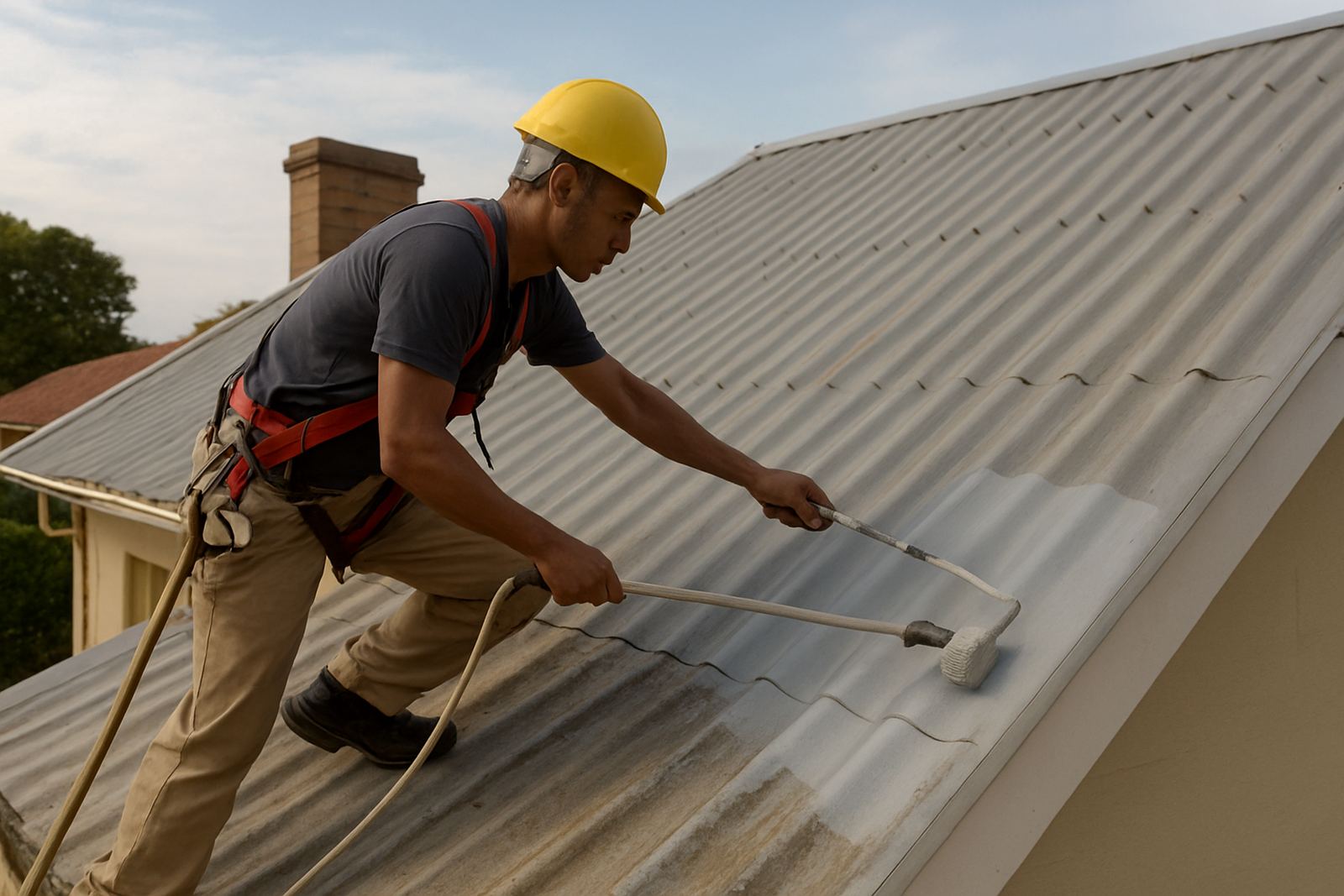
Roof paint can normally be applied by brush, roller or spray, depending on access and the size of the job. For larger commercial work, spray equipment can save time, but edges, screw heads and repairs still need hand attention. No special power is needed for the paint itself, but spray work may need electricity, extension leads or generator support if load-shedding hits. A gas heater is usually not required, though warm, dry conditions help the coating cure well.
- Check weather forecast and avoid rain before the paint has cured
- Work in moderate temperatures, not under harsh midday heat
- Keep roof traffic to a minimum until fully dry
- Use safe access and fall protection on steep roofs
Choosing the Right Roof Paint for the Job
Not every roof needs the same coating, and that is where proper product recommendation helps. Concrete roofs often need good adhesion and colour retention, while fibre cement needs a coating that does not crack or flake as the board moves slightly over time. Metal roofs need close attention to corrosion, especially around cut edges and screw points.
If the roof is near the sea in places like Gqeberha or Cape Town, choose a coating that handles moisture and sun exposure well. If it is inland in Joburg, UV and dust are often the bigger issue. ColouRight Paints can talk through the roof age, previous coatings, and whether a repaint or a full prep system is the better route.
Care, Servicing and Repaint Troubleshooting
Once a roof has been coated, simple maintenance helps it last longer. Check the roof after heavy rain, high wind or hail, and look for hairline cracks, lifting around fasteners, rust staining or water marks under the eaves. Small defects caught early are much easier and cheaper to fix.
For landlords, contractors and facilities teams, regular servicing means less chance of surprise leaks and fewer emergency call outs. If a repaint is failing, it is usually because of poor prep, moisture trapped under old coatings, incompatible previous products or not enough drying time between coats. If needed, ask for repaint troubleshooting and surface prep advice before you start patching over the problem.
- Wash down dust and bird mess where safe to do so
- Clear gutters and roof valleys so water can move freely
- Touch up exposed metal promptly to limit rust spread
- Keep records of product type, batch and date for later maintenance
What to Check Before You Order Roof Paint
Before ordering, measure the roof area, note the roof material and check the current condition. If the roof is concrete, fibre cement or metal, that changes the primer and application method. Also check whether the roof has old chalking, flaking paint, leaks or rust, because that affects how much prep is needed and whether more than one coat will be required.
It also helps to consider access, drying time and who will be doing the work. A contractor working to a tight programme may need trade support and larger quantities, while a homeowner tackling a weekend project may prefer smaller packs, a matching sample and clear colour advice before ordering. If you are unsure, send the details through our contact form and ask for guidance before placing the order.
Key facts
| Product type | Specialised roof coating for colour and weather protection |
|---|---|
| Suitable surfaces | Concrete roofs, fibre cement roofs and prepared metal roofs |
| Finish options | Colour matched and tinted options, subject to product range |
| Typical pack sizes | Small, medium and trade bulk containers |
| Application methods | Brush, roller or spray |
| Best use areas | Homes, garages, schools, workshops and commercial roofs |