
Weather Protection For South African Exterior Walls
Exterior wall paint is made for outside masonry, plaster, cement render and properly prepared fibre cement surfaces. It is designed to help protect against UV exposure, light rain, dirt build-up and general weather wear, while keeping colour on the wall for longer. In coastal areas such as Gqeberha, Walmer and Bellville, the right finish also helps with salt air and moisture exposure. On inland sites like Sandton and Randburg, it is more about heat, dust and strong sun.
A good exterior coating should be breathable enough for masonry, yet tough enough for regular weather changes. If the wall has been repaired recently, or there are fine hairline cracks, the correct product choice matters because some finishes bridge small imperfections better than others. The finish also affects how often you will repaint, and how much maintenance the wall needs between coats.
Finish Types, Tinting And Size Options
ColouRight Paints can assist with colour matching and tinting so your outside walls suit the building, boundary walls and trim colour. Popular options include matt exterior finishes for a flatter look, and low-sheen products where a bit more washability is needed. For high-traffic areas, some customers prefer a coating that makes dirt easier to rinse off with water and a soft brush.
Size selection should match the size of the job. A small garden wall may only need sample pots and a few litres, while a full house exterior or block of flats can require trade-sized containers and bulk planning. Coverage depends on surface porosity and texture, but many exterior paints cover around 8 to 12 m² per litre per coat on prepared surfaces. Rough plaster can use more, so it is worth allowing extra for touch-ups and patch work.
- Sample pots for colour checks before full application
- 5 L containers for small repairs, boundary walls and feature sections
- 10 L and 20 L containers for homes, complexes and larger commercial work
- Tinting support for light, mid-tone and deeper exterior colours
Where This Paint Suits Best
This product suits new builds, repaint projects and maintenance work on exterior masonry walls, parapets, boundary walls and sheltered sections under eaves. It is also a practical choice for shopfront surrounds, office walls and rental properties that need a clean, professional appearance with less frequent repainting. For contractor work, it helps when colour consistency must be maintained across several units.
It is a good fit for homes near busy roads, as dust and grime can settle quickly on outside walls. In humid areas, the wall surface must be sound and dry before painting, otherwise moisture can push through and cause peeling or patchy finish. If the building has previous chalking, flaking or water staining, those issues should be dealt with first. A nice looking coat on a weak surface will not last, simple as that.
- Residential homes, flats and estate boundary walls
- Commercial buildings, warehouses and rental stock
- Coastal and inland repaint work, provided prep is done properly
- New plaster, old repaint surfaces and repaired wall sections
Surface Preparation And Application Basics
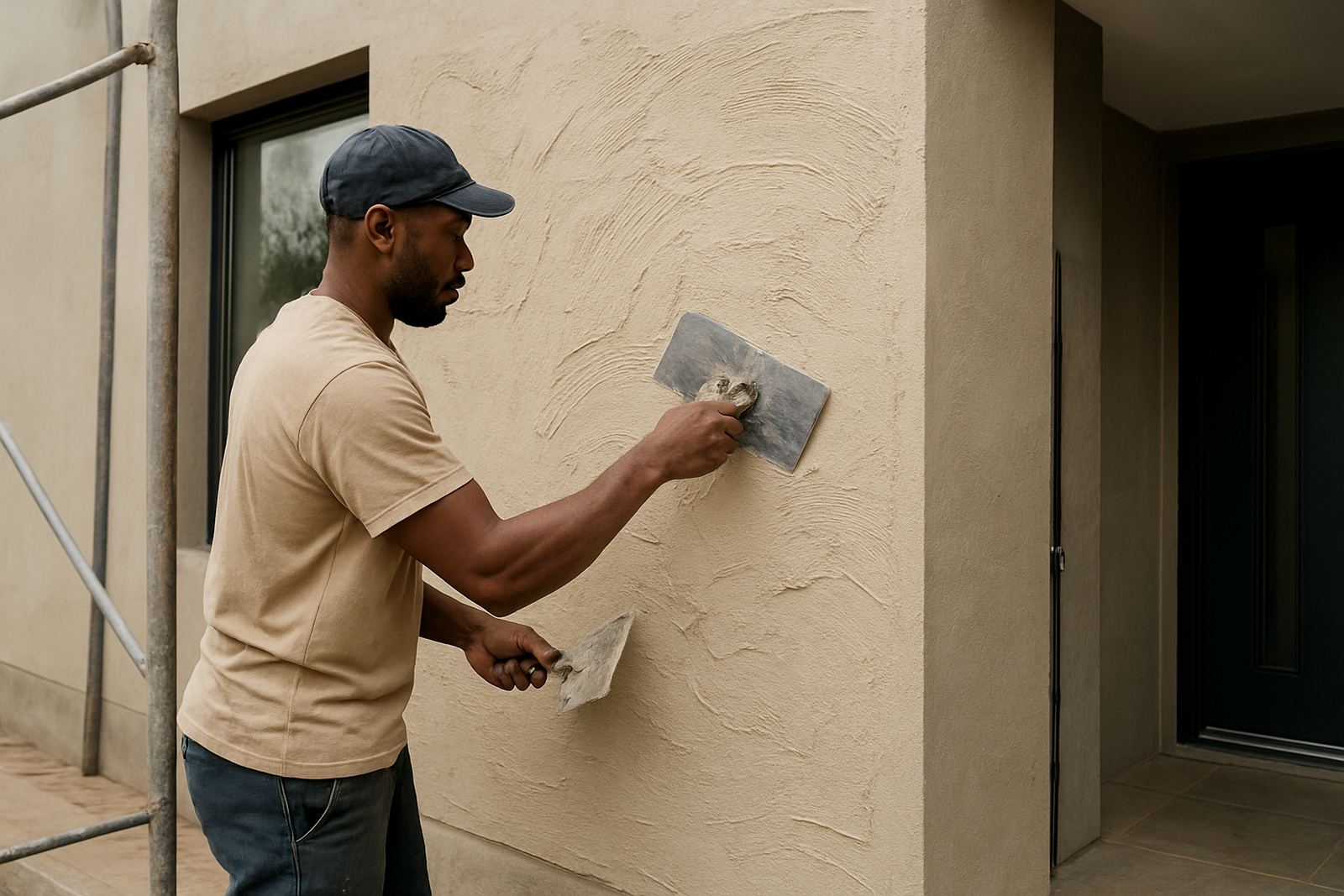
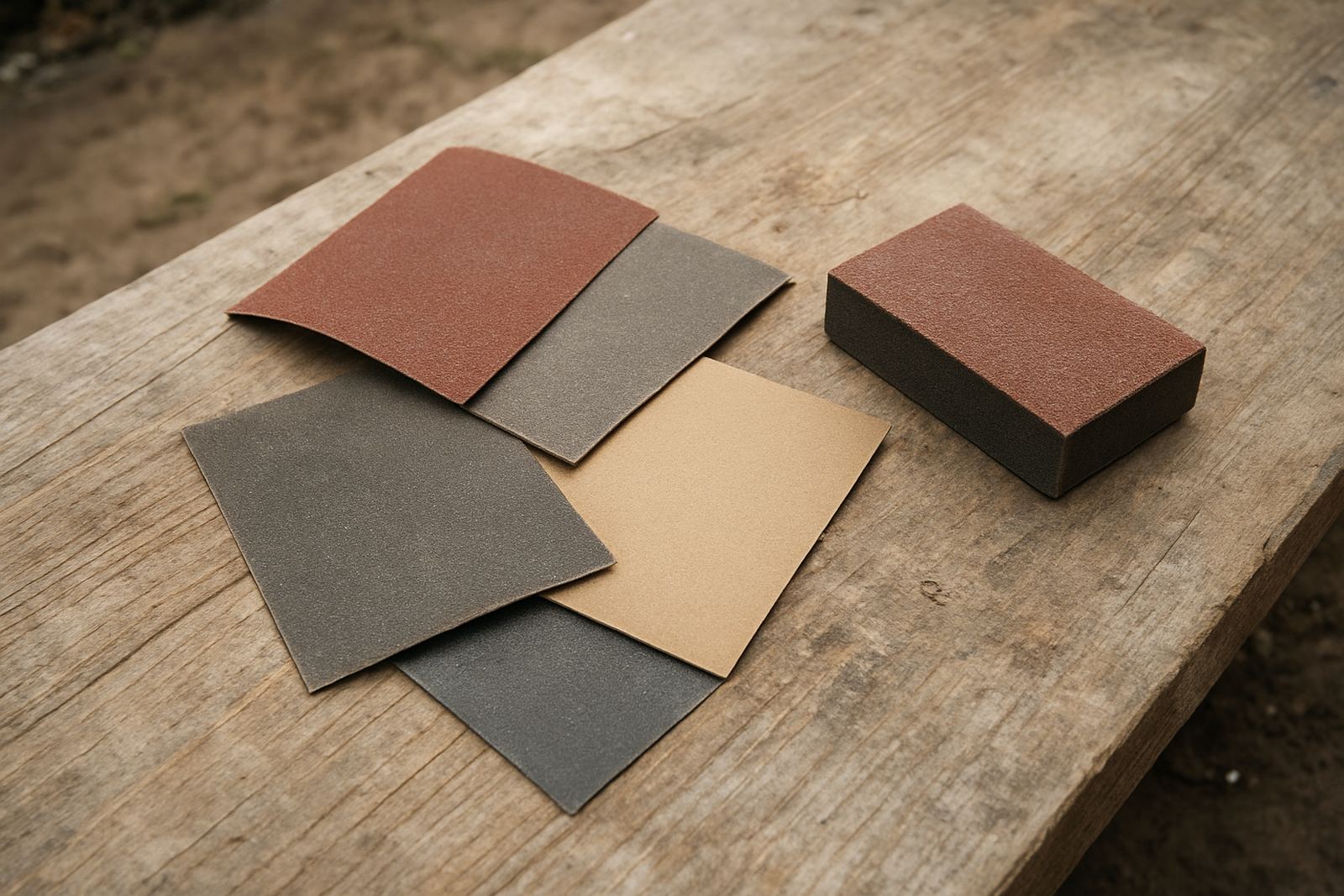
Exterior wall paint performs best on clean, dry, sound surfaces. Loose paint must be scraped off, dusty walls brushed down and greasy marks cleaned before applying primer or topcoat. Fresh plaster usually needs to cure before painting, and repaired cracks should be filled and sanded. If there is mould or algae, wash the area first and allow it to dry fully. Skipping prep can lead to early failure, even with a good coating.
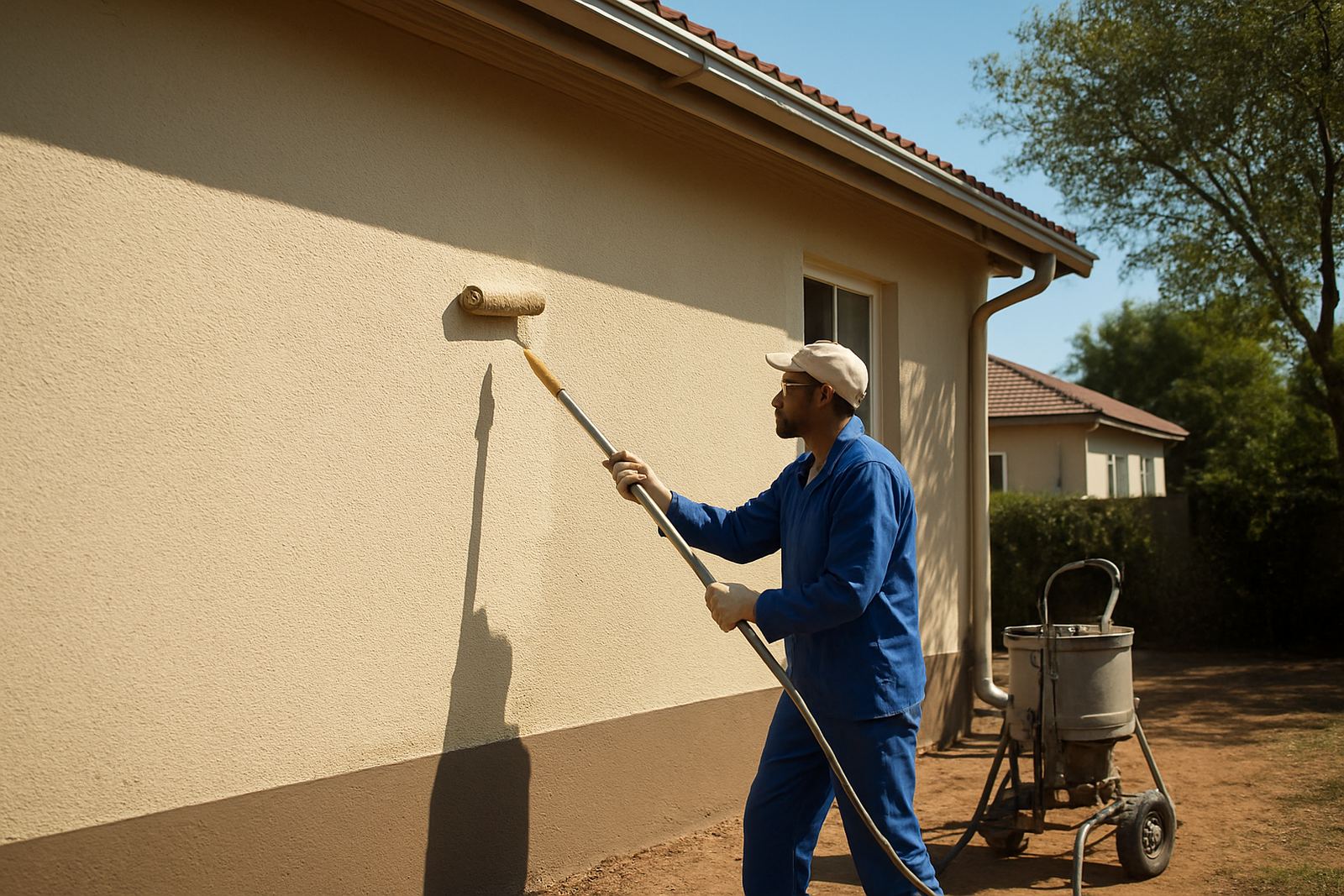
Application can be done by brush, roller or spray depending on the site and finish needed. Most exterior jobs do not need gas or special heating equipment, but a steady water supply for cleaning tools and an extension lead for mixing or site lighting can be useful. In load-shedding periods, plan your paint schedule around daylight so coats can dry properly. If you are spraying, make sure the area is masked off and protected from wind and overspray.
Allow enough drying time between coats, and do not paint if rain is expected within the product's recommended recoat window. On coastal jobs, early morning dampness can slow drying, so starting a bit later in the day may give better results.
Care, Cleaning And Repaint Planning
Once the wall is painted, regular care keeps the finish looking better for longer. Light dust can be rinsed off with water and a soft cloth or sponge. For marks near entrances or security gates, use gentle washing rather than harsh scrubbing, as that can dull the surface. If a wall takes on a lot of sun, check it yearly for fading, cracks or small blistered spots before they become bigger repairs.
Repaint timing depends on exposure, surface prep and the quality of the original application. A sheltered wall may last longer than one facing wind and weather all day. Around beachfront and industrial areas, many owners inspect exterior paint more often because salt and grime can build up faster. Keep a small amount of matching paint aside for touch-ups, especially if the wall colour was custom mixed.
- Wash with mild soap and water when needed
- Check for cracks, damp patches and peeling at least once a year
- Keep leftover paint sealed for future touch-ups
- Store containers off the floor in a cool, dry place
What To Check Before You Order
Before placing an order, confirm the wall type, current surface condition and how many coats you plan to apply. It helps to know whether the wall is bare plaster, previously painted or already patched. You should also measure the wall area, note any texture and decide if you want the finish to match existing colours or change the look completely. If the job is for a contractor account, ask about trade order support and bulk quantity planning.
For colour-critical work, bring a sample, photo or a small painted piece to the branch so matching can be done properly. Colours can look different in shade and full sun, so it is worth checking samples on the actual wall. If you are working across multiple units, make sure the same tint batch is used where possible. That helps avoid slight shade differences from unit to unit.
- Measure wall area and allow extra for porous or rough surfaces
- Confirm substrate type and any primer requirements
- Check colour, sheen level and batch consistency
- Ask about sample pots before committing to full quantities
ColouRight Paints Support Across Gqeberha, Joburg And Cape Town
ColouRight Paints is based in Korsten, Gqeberha and supports customers from Walmer, Newton Park, Sandton, Randburg and Bellville. The team can assist with paint colour matching, custom tinting, sample pot mixing, surface prep advice and product recommendations for exterior wall projects. If you are unsure about coverage, repaint trouble spots or contractor account help, the branch team can talk you through it and help you order the right amount first time.
For practical help or to discuss a project, send a message through our contact form. Whether you are repainting a family home, managing a rental block or sorting out a trade job with a tight deadline, the right exterior wall paint needs to suit the wall, the weather and the way the building is used.
Key facts
| Product type | Exterior wall coating for masonry, plaster and prepared cement surfaces |
|---|---|
| Finish options | Matt and low-sheen, depending on the surface and look required |
| Pack sizes | Sample pots, 5 L, 10 L and 20 L options |
| Coverage | About 8 to 12 m² per litre per coat on prepared surfaces |
| Suitability | Homes, flats, boundary walls, commercial buildings and repaint work |
| Need for power or gas | No gas required; only normal painting tools, cleaning water and optional site lighting or extension leads |