
What Extension Poles Do on a Paint Job
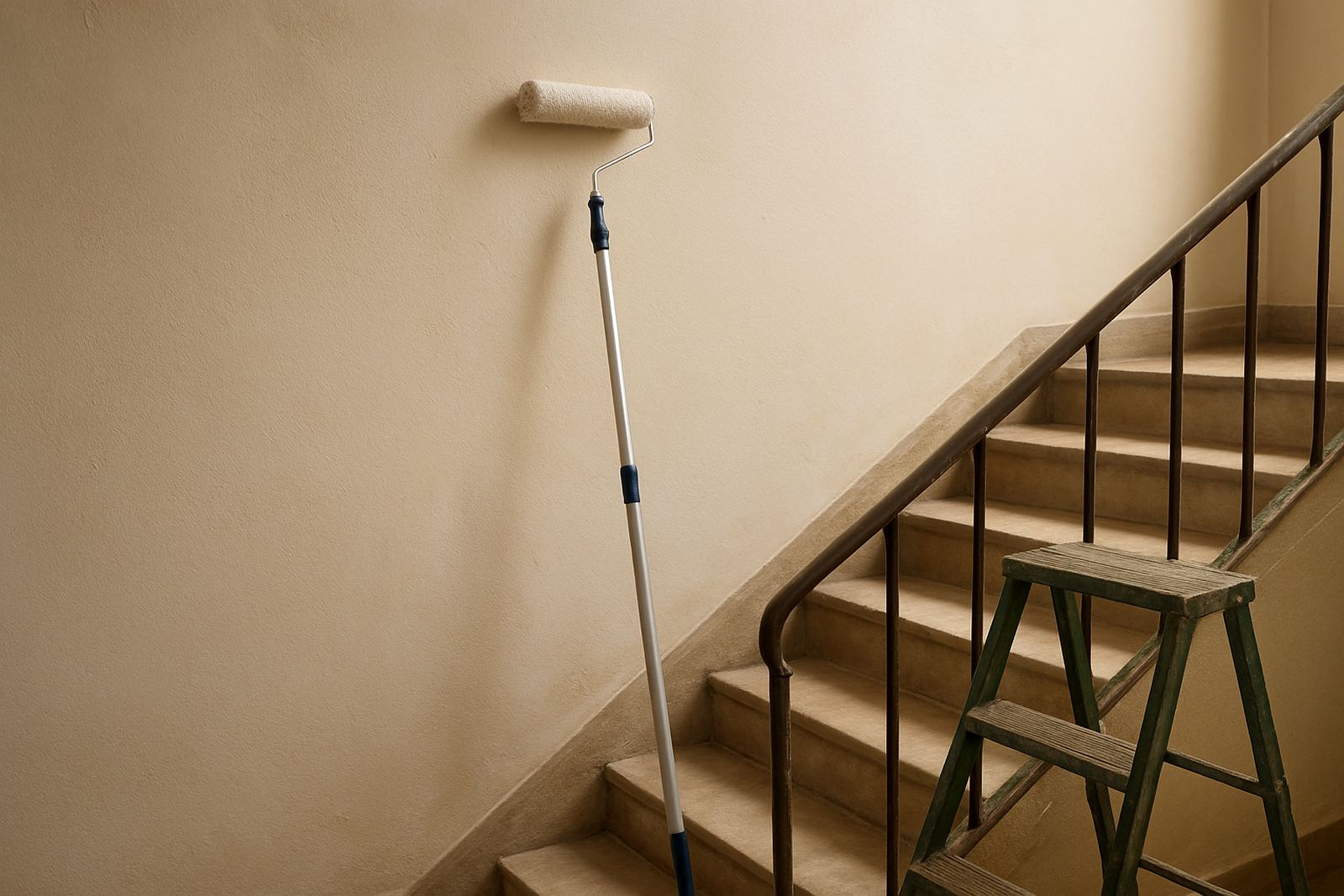
An extension pole gives you extra reach for rollers, some brushes and certain cleaning tools so you can work from floor level instead of climbing up and down ladders. That matters on stairwells, double-volume rooms, boundary walls and high commercial walls where you need steady control and better coverage. It also helps reduce fatigue, which usually means neater lines and fewer missed patches on a long day.
Most paint poles are made from aluminium, fibreglass or a mixed shaft. Aluminium is light and easy to handle for smaller jobs. Fibreglass is a good choice where you want a bit more rigidity, especially with wider rollers or rough plaster. Telescopic poles are common because they extend and lock at set lengths, while fixed poles are simpler and often cheaper for one repeat task.
- Suited to interior ceilings, tall walls, garage walls and boundary walls
- Useful for DIY repainting and contractor work
- Helps reduce ladder movement on busy sites
- Works best with standard roller frames and compatible thread fittings
Sizes, Lengths and Common Options
Extension poles are usually sold in a few practical lengths. Short poles around 0.9 m to 1.8 m are handy for trimming and mid-height wall work. Medium poles in the 1.5 m to 3 m range suit most homes and small commercial interiors. Longer telescopic poles can reach 4.5 m or more, which is useful for stairwells, high atriums and warehouse touch-ups. The right length depends on your ceiling height and the roller frame size you are using.
When choosing a pole, check the locking method, shaft stiffness and grip comfort. A pole that flexes too much can make the roller bounce on the wall, especially when you are using thicker coatings. A quick-lock twist section is common, while some poles use push button locks or clamp locks. For heavier work, a thicker wall shaft is worth the extra Rand because it stays steadier under pressure.
- Short reach: 0.9 m to 1.8 m
- Medium reach: 1.5 m to 3 m
- Long reach: 3 m to 4.5 m plus
- Common shaft materials: aluminium and fibreglass
Where Extension Poles Work Best
These poles suit almost any paint area where the ceiling is higher than normal or where moving a ladder would interrupt the job. In Gqeberha and along the coast, they are especially useful for homes with high verandas, exposed beams and larger open-plan rooms. In Sandton offices and retail spaces, they help painters work around furniture, counters and partition walls without slowing the whole site down.
They are also a practical choice for repainting in humid or dusty conditions. When a wall needs a second coat, a pole makes it faster to keep your rolling pattern consistent. For contractors, this matters on municipal or commercial work where time is tight and access can be awkward.
- Homes with 2.7 m ceilings or higher
- Passages, stairwells and entrance halls
- Shops, offices and schools with tall internal walls
- Exterior wall work where safe ground access is available
Using a Pole Safely and Getting the Fit Right
Most extension poles do not need power or gas. They are manual tools, so the key issue is compatibility. Check that the roller frame thread matches the pole head, and make sure the head sits tight before you start. If the frame is loose, the roller can twist under pressure and leave lap marks. A proper fit saves time and gives better control near ceilings and cornices.
Set the pole length before loading the roller with paint, then test the lock before you begin. On wet surfaces, stand with your feet apart and use smooth strokes rather than pushing hard. If you are painting near electrical fittings or ceiling fans, switch off power where practical and work carefully around fittings. For exterior work, watch overhead lines and do not overreach from unstable steps or makeshift platforms.
- Check thread compatibility before ordering
- Test locks and clamps before use
- Keep the roller loaded evenly to avoid drips
- Do not use a pole to force access beyond safe reach
Care, Cleaning and Servicing Between Jobs
Cleaning your pole after use keeps the locks working and stops dried paint from building up in the joints. Wipe the shaft with a damp cloth, then dry it properly before storing it. If the pole is telescopic, extend it fully and rinse out any dust or paint splash around the locking sections. On coastal properties, salt air can leave a fine film, so a regular wipe down helps prevent stiffness and wear.
For trade use, inspect the pole every few jobs for bends, worn threads or loose end caps. A slightly bent shaft can make rolling feel uneven, especially on longer reaches. If the lock starts slipping, stop using it until it is tightened or replaced. Good care is basic but it saves money, and it keeps the tool usable for much longer.
What to Check Before You Order
Before you buy, measure the highest point you need to reach and allow enough room for comfortable rolling. Think about the type of paint, the roller width and the surface texture too. A rough exterior wall needs more control than a smooth interior ceiling, so a stiffer pole may be a better choice. If you are ordering for a contractor team, it helps to standardise the thread type and length so everyone can swap heads without delays.
At ColouRight Paints, we can help you check pole length, fitting type and practical use on site. If you are matching the pole to a repaint job in Korsten, Walmer, Newton Park, Bellville, Randburg or Sandton, send through the job details and we can advise on the right setup. That includes roller compatibility, quantity planning and what to keep on hand for touch-ups or second coats, because the wrong pole can slow a whole crew down.
- Measure working height, not only ceiling height
- Confirm the roller frame thread and head style
- Choose a shaft that suits the coating weight
- Ask about spare parts, clips and replacement heads
Key facts
| Product type | Paint extension pole for rollers and compatible paint accessories |
|---|---|
| Typical lengths | 0.9 m to 4.5 m plus, depending on model |
| Common materials | Aluminium, fibreglass or mixed shaft |
| Locking system | Twist lock, push button lock or clamp lock |
| Compatibility | Standard threaded roller frame heads and selected accessory fittings |
| Power or gas needed | None, manual tool |