
What a waterproofing coating does
Waterproofing coating is a flexible surface treatment designed to block rainwater, damp and minor hairline movement before it works into the substrate. It is commonly used on parapets, boundary walls, roof edges, concrete slabs, balcony areas and problem interior walls where moisture keeps returning after repainting.
Unlike standard decorative paint, this product is built for areas that face direct weather, ponding water, or recurring seepage. It is useful on mineral surfaces such as plaster, concrete and masonry, provided the base is sound and properly prepared. On older buildings in Gqeberha and coastal parts of Cape Town, it is often chosen for its ability to handle humidity and wind driven rain better than ordinary topcoats.
For best results the surface must be dry, sound and free from salt, loose paint and oil. If a wall is already blistering from rising damp or a leaking crack, the cause must be fixed first. A coating can protect the area, but it does not replace repairs.
Sizes, pack options and ordering details
We supply waterproofing coating in practical pack sizes for small repairs and larger jobs. Common options include 1 litre, 5 litre and 20 litre containers, depending on the colour line and the system required. For trade work, we can help estimate coverage so you do not under order, especially where a roof edge or parapet has more surface area than expected.
Coverage varies by surface texture and porosity, but a useful guide is 4 to 6 square metres per litre per coat on smooth sealed surfaces, and less on rough or thirsty substrates. Two coats are usually needed, and some problem areas need a reinforcement layer or extra build on cracks and joints. On jobs with lots of detail, factor in corners, pipe penetrations and upstands, because these usually use more product than the flat area itself.
When ordering, tell us whether the job is exterior, interior, old or new, and whether it will be applied over existing paint or raw masonry. That helps us point you to the right product and the correct prepartion steps.
Where this coating suits best
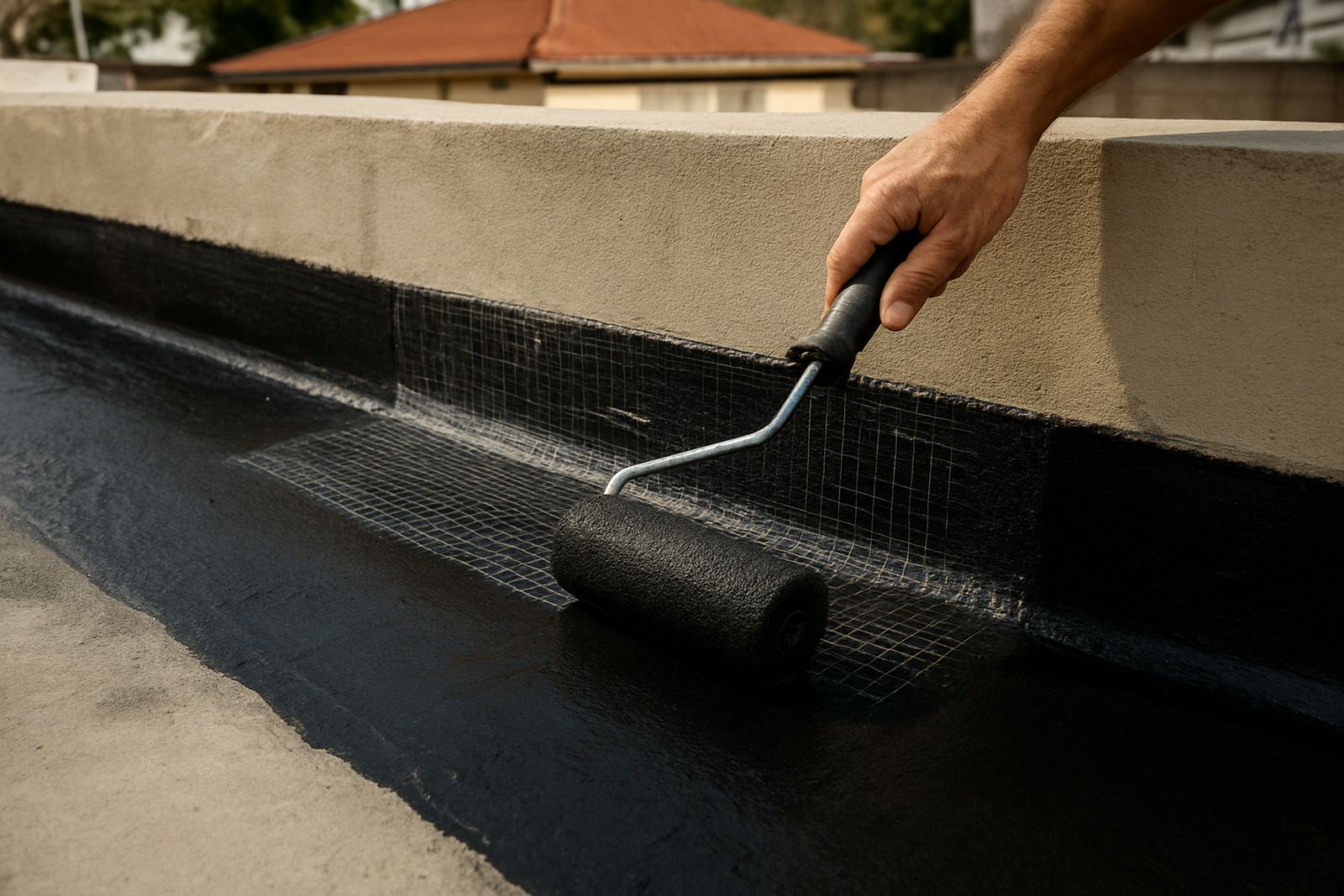
This coating suits areas where moisture protection matters more than appearance alone. Typical applications include parapets, retaining walls, balcony edges, fascia detail, bathroom walls, laundry splash zones and exterior masonry exposed to driving rain. It is also useful around expansion joints, window surrounds and other points where water enters through small gaps.
In coastal suburbs, salt air can accelerate paint failure if the wrong system is used. That is why surface preparation and product choice matter so much. In Joburg, the bigger concern is often thermal movement and summer storms, so a coating with flexibility and sound adhesion is worth the extra planning. For commercial sites, it is also practical where there is early morning washing down or regular cleaning.
It may not be the right answer for surfaces with structural cracking, active leaks from plumbing, or areas that stay permanently wet. In those cases, repair work and a more specialised build-up may be needed. We can talk you through what is realistic before you start, so the job is done properly first time.
Surface preparation and application on site
Good prep is what makes the coating perform. Start by washing off dirt, chalking paint, algae and salts. Any loose coating must be scraped back to a firm edge, and any open cracks should be filled or sealed before coating begins. On dusty plaster, a sealer or primer may be required so the coat can bond properly.
Application is normally done by brush, roller or spray depending on the area and product build. Most jobs need two coats, with drying time between coats based on temperature, airflow and humidity. In Gqeberha and Bellville, morning damp can slow the dry time, so it helps to plan around the weather. On bigger roofs or walls, keep the wet edge moving and do not spread the coating too thin, as this can reduce protection.
For trade customers and contractors, we can help with bulk quantity planning and product recommendations. If you are coating a property with tenants, body corporate rules, or a live business site, plan access and drying windows carefully so there is no unnecessary disruption.
Care, inspection and when to recoat
Once applied, waterproofing coating should be checked after heavy rain, strong sun and any maintenance work done on the area. Look for pinholes, open joints, hairline cracks or lifting at edges. If a section is damaged, it is better to repair it early than wait for water ingress to spread below the surface.
Routine washing should be gentle. Avoid harsh scrubbing or high pressure cleaning near edges and joints, because that can force water into weak points. On a busy commercial property, make sure cleaners know where coated areas are, so they do not strip the protective film by accident. A coating can last well when it is looked after, but all protective systems need periodic inspection.
Recoating intervals depend on exposure, product type and the amount of foot traffic or weather stress. A roof edge in full sun may need attention sooner than a sheltered internal wall. If you are not sure whether it is time to refresh the system, send us details and photos and we will advise on the next step.
What to confirm before you order
Before placing an order, check the substrate, the size of the area, the colour requirement if any, and whether the product needs to work with a primer, sealer or reinforcing system. Some jobs only need a local patch, while others need a full membrane build-up. If the surface is already painted, we need to know what is on there now so we can guide the right prep and compatibility.
It also helps to confirm the exposure conditions. Is the area coastal, shaded, full sun, or regularly washed down? Is it above a roof, beside a planter, or near plumbing? Small details like this affect coverage and product choice. If you are ordering for a contractor account, send your quantities through early so we can help with stock planning and collection timing.
ColouRight Paints assists from our Korsten base in Gqeberha, with support for Walmer, Newton Park, Sandton, Randburg and Bellville. For advice or order support, send a message through our contact form. We can help you match the right coating approach to the job, not just the colour on the tin.
Key facts
| Product type | Flexible waterproofing coating for moisture prone surfaces |
|---|---|
| Typical pack sizes | 1 litre, 5 litre, 20 litre |
| Coverage guide | About 4 to 6 m² per litre per coat on smooth surfaces |
| Application tools | Brush, roller or spray depending on area |
| Drying needs | Dry time varies with temperature, airflow and humidity |
| Best suited to | Parapets, roof edges, balconies, masonry and splash zones |