
Start With the Surface, Not the Tool Rack
Before you pick up a brush or roller, check what you are painting. Smooth interior plaster, rough exterior masonry, timber trim, galvanised steel and previously painted surfaces all need different tools and a different pace. A wrong choice can leave lap marks, streaks, excess texture or wasted paint.
For a small bedroom wall, a medium-pile roller may be enough. For a weathered exterior wall in Walmer or Bellville, a longer-pile roller gives better coverage into the uneven spots. Trim, corners, window frames and cut-in areas still need a decent brush, even when the main walls are rolled.
- Check the surface texture first: smooth, lightly textured or very rough.
- Check the paint finish required: matt, eggshell, satin or gloss.
- Check the area size: small touch-up, single room, full house or trade job.
- Check the conditions: coastal damp, dust, heat or possible power cuts.
Brushes: Best for Cut-In Work, Trim and Detail
Brushes are the tool you use when control matters. They are ideal for corners, edges, detailed mouldings, door frames, skirtings and any place where a roller would leave an untidy line. A good brush holds enough paint to work cleanly, but not so much that it drips down the wall.
For water-based paint, synthetic bristles are usually the better choice. For solvent-based coatings and some enamel jobs, a firmer brush may give a cleaner finish. On timber, a narrower brush makes it easier to follow the grain and avoid heavy brush marks. On metal, a neat brush helps you keep a thin, even coat without runs.
- Use a 25 mm to 50 mm brush for trims, frames and touch-ups.
- Choose angled brushes for cutting in along ceilings and corners.
- Keep one brush for general work and one finer brush for detail.
- Wash brushes properly between coats or they will harden quickly.
If you are doing repaint troubleshooting, look closely at the old finish first. Flaking, chalking or peeling paint will show up quickly if the brush is dragging over poor prep work.
Rollers: Faster Coverage for Walls and Ceilings
Rollers are the main time-saver for larger surfaces. They spread paint evenly and help you cover more square metres per minute than a brush alone. The trick is to match the roller pile to the wall. Short-pile rollers suit smooth plaster and give a neater finish. Medium-pile rollers work well on most interior walls. Long-pile rollers handle rough blockwork, textured plaster and exterior walls better.
Ceilings usually need a steady hand and a roller with a decent extension pole. That keeps your shoulders from giving out halfway through the job. In a hot room or during a load-shedding window, work in manageable sections so the leading edge stays wet and does not flash dry.
- Short pile for smooth surfaces and finer finishes.
- Medium pile for general interior walls.
- Long pile for rough walls, textured surfaces and masonry.
- Use a tray liner or roller grid to load paint evenly.
Do not overload the roller. Too much paint leads to drips, thick edges and uneven sheen, especially on satin and gloss finishes.
Accessories That Save Time and Improve the Finish
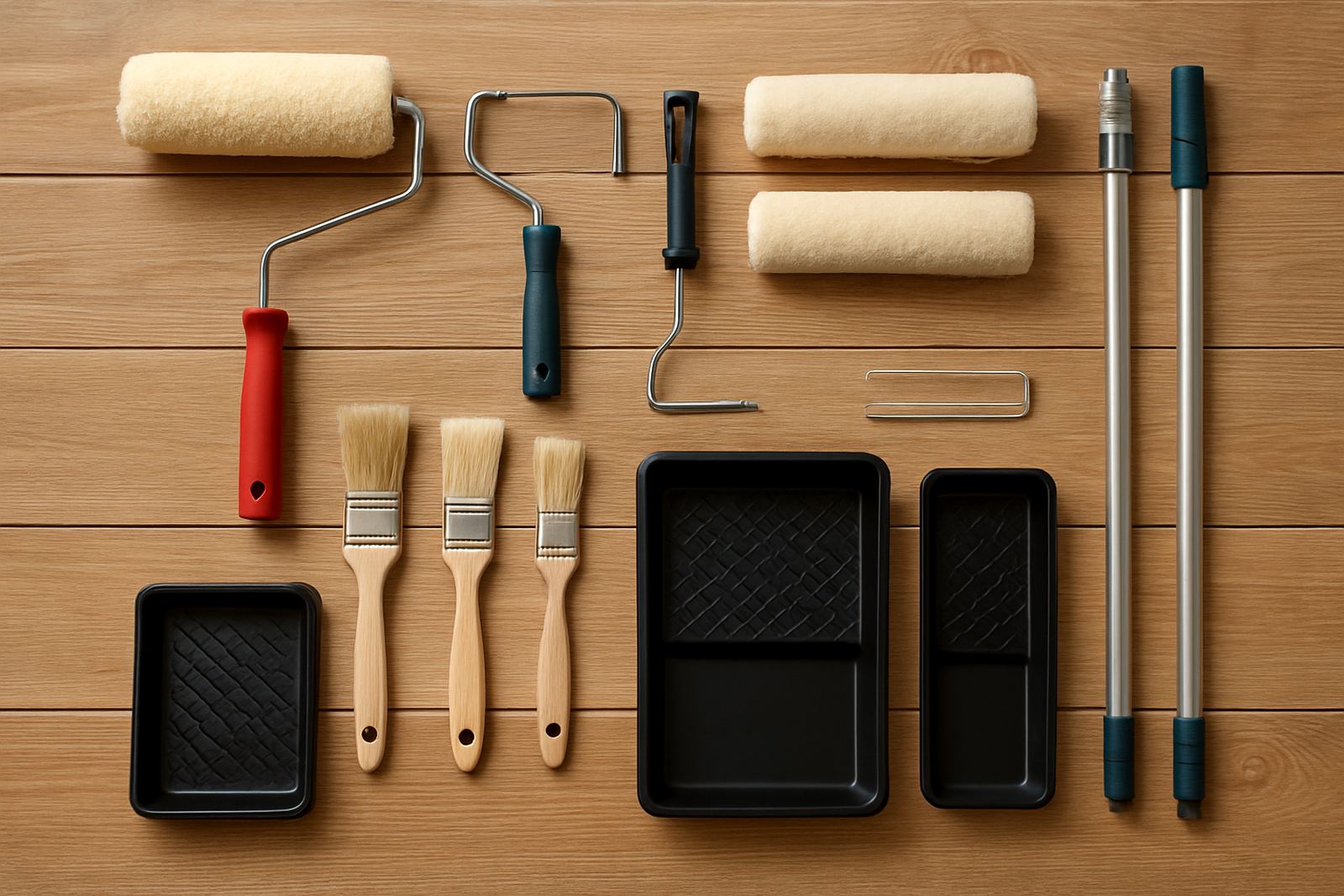
The extra items matter. A paint tray, roller frame, extension pole, masking tape, dust sheet and stir stick can make the whole job easier and cleaner. For larger trade orders in Sandton or Randburg, these accessories also help crews move faster from room to room without wasting time between coats.
Masking tape is useful but only if the surface is clean and dry. A dust sheet protects floors, tiles and fittings from splatter. Stir sticks help mix tint properly, especially when doing sample pot mixing or custom tinting. A paint strainer can also be useful when dealing with older stock or when you want a cleaner flow through the brush.
- Use extension poles for ceilings and high walls.
- Keep a scraper and filler knife ready for surface prep.
- Have clean rags or paper towels for drips and edge clean-up.
- Use a bucket or pail for carrying small amounts of paint on ladders.
Step-by-Step: Choosing the Right Setup for the Job
1. Identify the surface and check whether it needs sanding, filling or priming first. 2. Decide the finish you want, because matt and gloss do not behave the same way. 3. Pick the main tool: brush for detail, roller for coverage, or both for most rooms. 4. Match the roller pile or brush type to the coating. 5. Test on a small area before starting the full job. That small test can save hours later.
For a repaint in Korsten or Newton Park, this sequence helps you spot issues early, like old water stains, patchiness or poor adhesion. If the colour looks slightly off in daylight, ask for colour consultation before you commit to the full tin. A shade can change a lot from one room to another, and the north-facing wall may not look the same as the lounge at dusk.
- Checklist before painting: surface clean, dry, dust-free and sound.
- Checklist for tools: brush, roller, tray, pole, tape and cloths.
- Checklist for paint: correct tint, enough quantity and right sheen.
- Checklist for timing: enough daylight, ventilation and drying time.
Tool Choice for Homes, Shops and Trade Jobs
DIY work often needs a smaller, more flexible kit, while trade jobs call for better coverage, repeatable results and bulk quantity planning. A homeowner repainting one room may only need one roller sleeve, two brushes and a few accessories. A contractor covering several offices in Cape Town or a shop fit-out in Gqeberha may need matched tool sets, spare sleeves and extra trays so the team can keep going without delays.
For coastal areas, rinse tools properly at the end of the day because salt air and humidity can affect both paint and equipment. In busy retail or contractor work, label brushes by use so nobody grabs the wrong one for undercoat, topcoat or detail work. It sounds small, but it saves arguments later and keeps the finish more even.
- Home jobs: keep the kit simple and easy to clean.
- Trade jobs: carry spare rollers, extra tape and backup brushes.
- Exterior jobs: choose tools that can handle rougher surfaces.
- Interior finish work: use finer brushes and shorter pile rollers.