
Start With the Right Kind of Touch-Up
Not every mark needs a full repaint. A rubbed corner, nail chip or chair scuff can often be fixed with a small amount of matched paint and careful blending. The key is to know when a touch-up will do the job and when the whole wall section needs attention.
For small damage, check the paint type first. Walls near passages, skirting boards and around light switches usually need a tougher finish than a feature wall in a quiet room. In coastal areas like Gqeberha and Cape Town, humidity can also affect how quickly paint dries and how well the edge blends, so allow proper drying time between coats.
- Use touch-up paint for marks smaller than a hand span and shallow chips
- Repaint larger patches where the sheen has changed or the wall has been washed often
- Check if the damage is only on the surface or if plaster has broken away
Clean and Prepare the Spot Before Any Paint Goes On
Good touch-ups start with prep. Dust, grease and loose paint will show through no matter how carefully you paint over them. A quick clean with mild soap and water is often enough for interior marks, but oily fingerprints near kitchens may need a stronger wipe-down before you begin.
Let the area dry fully. If you are working during load-shedding windows, make sure you have enough daylight or a strong work light because patching in poor light often leads to missed spots. Small cracks can be opened slightly with a scraper, filled, then sanded smooth once dry.
- Wash the area with a soft cloth and mild detergent
- Remove any loose paint or flaky edges
- Fill chips and hairline cracks, then sand lightly
- Wipe away sanding dust before painting
Match the Colour and Sheen, Not Just the Name
A name on an old tin is not always enough. Paint fades with sun, cleaning and age, especially on walls that get strong afternoon light or sit near windows. That is why colour matching matters, and why a sample pot can save time before you commit to a larger amount.
Sheen matters too. A matt wall touch-up on a satin wall will stand out even if the colour is exact. For that reason, bring in a paint sample, a chip from the wall or even a photo taken in natural light if you are unsure. In Korsten and the surrounding Gqeberha area, it is common to see small colour shifts caused by coastal light and weather exposure, so matching on site is worth the effort.
Our colour matching and custom tinting support helps with interior and exterior repairs, whether you are fixing one bedroom wall in Walmer or a small office reception in Sandton.
Apply the Paint in Thin, Careful Layers
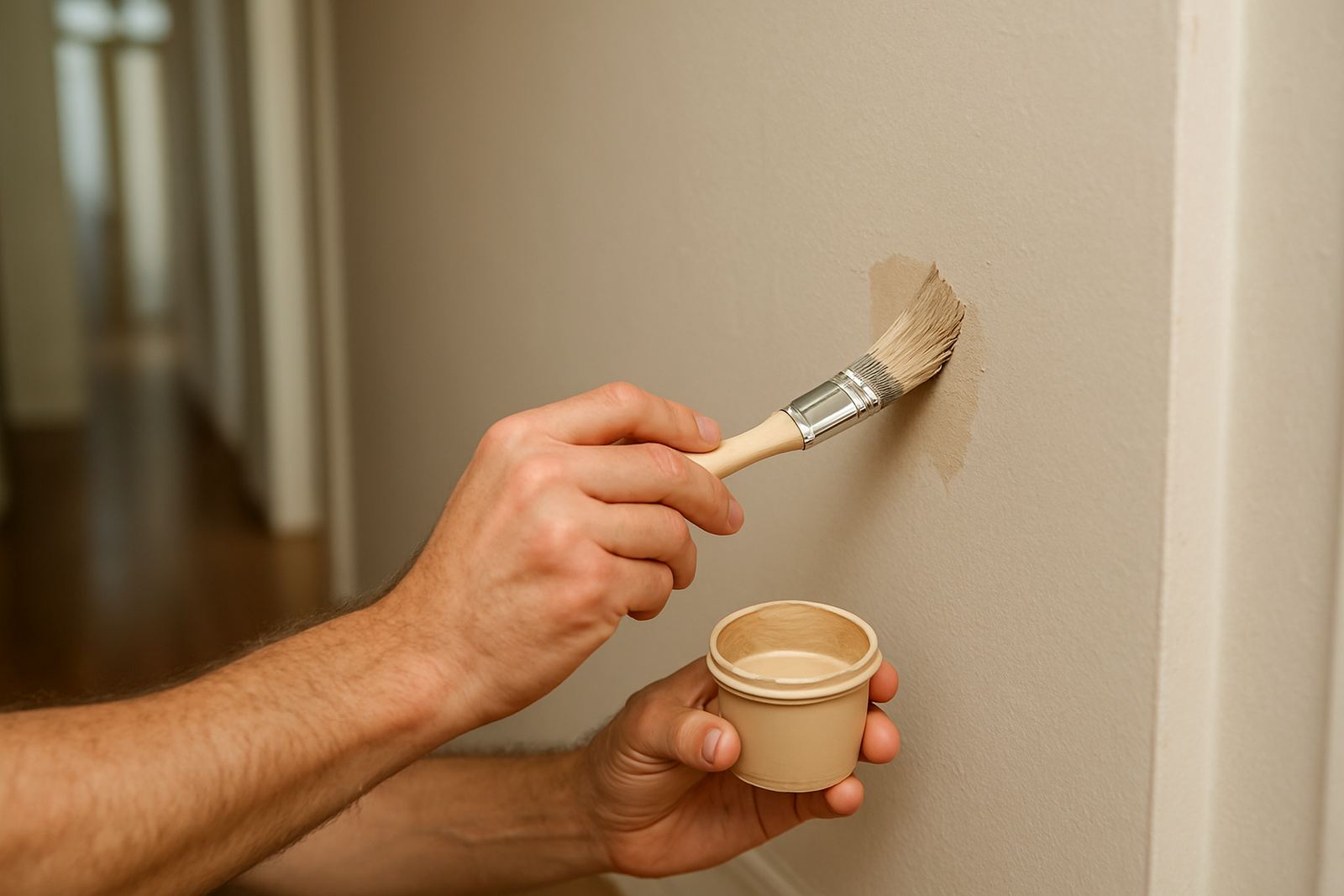
For most touch-ups, thin coats are better than one heavy patch. Use a small brush or sponge applicator, then feather the edges outward so the repair blends into the existing paint. If you pile paint on too thick, the spot can dry with a ridge or a different shine.
Let each coat dry before deciding if you need another one. Some colours cover in one pass, but light greys, off-whites and deep tints can need a second coat to hide the repaired area fully. Try not to over-brush once the paint starts to set, because that can leave marks that are harder to hide later.
- Load only a small amount of paint on the brush
- Work from the centre of the repair outward
- Feather the edges with light strokes
- Leave each coat to dry before checking the finish
Know Which Surfaces Need Extra Care
Some parts of the home take more punishment than others. Around door frames, skirting boards, stairwells and passage corners, paint often chips again if the surface was not properly sealed or if the area gets bumped daily. In rental properties and busy family homes, these are the repairs that show fastest.
Exterior touch-ups need even more attention. Sun, wind and rain can break down paint on window sills, boundary walls and metal railings. If the area is chalky, rusted or peeling, do not just cover it. Scrape back what has failed, treat the surface correctly and use the right product for the material. That is especially important in coastal suburbs where salt air can shorten the life of a weak repair.
- Prime bare plaster, timber or metal before topcoating
- Use exterior products for outside walls and trim
- Treat rust spots and damp stains before repainting
- Check bathrooms and kitchens for hidden moisture issues
When to Call for Colour Advice or Trade Support
Some touch-ups are quick, but others need a bit of guidance. If you are dealing with several wall colours, older paint stock or repeat damage after a recent repaint, it helps to speak to someone who handles colour matching every day. That is also useful for contractors who need smaller quantities matched for a repair job without buying a full drum.
At ColouRight Paints, our team supports DIY customers and trade clients with sample pot mixing, repaint troubleshooting and bulk quantity planning. We work from Korsten, Gqeberha, and also assist branches and service areas in Walmer, Newton Park, Sandton, Randburg and Bellville. If you are unsure about finish, coverage or surface prep, a quick call or message can prevent a second round of work.
For advice, use our contact form and ask about the right product for the room, surface and level of wear.