
Why dark walls need more than just another coat
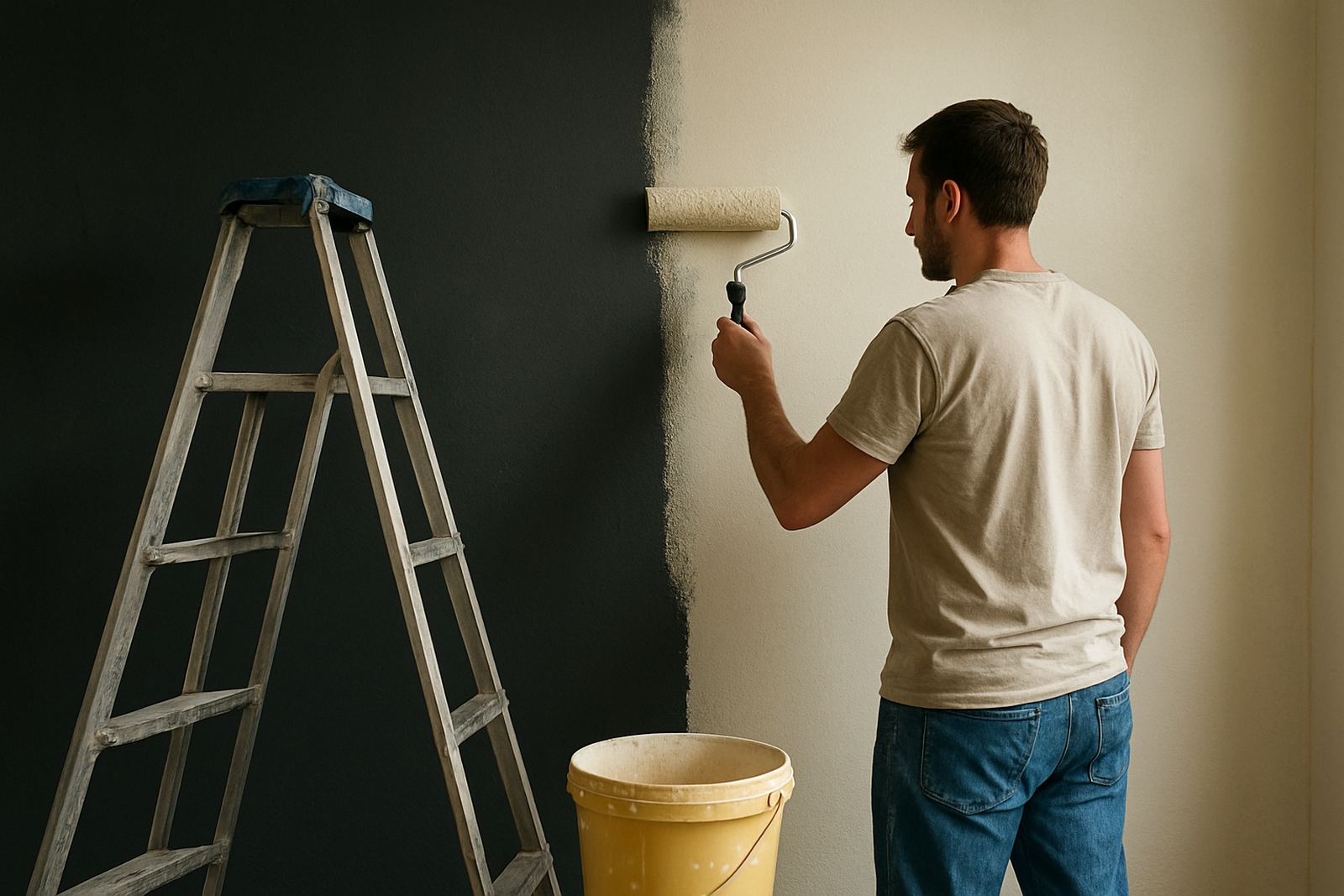
Strong colours like deep red, navy, charcoal, bottle green and black pigments can keep showing through if you put a lighter shade straight over them. That is why many repaint jobs end up patchy after the first coat, especially when the new colour is soft cream, white or a pale grey. On a wall with old roller marks, scuffs or touch ups, the darker base can also change how the new finish reads in daylight.
In Gqeberha, where bright sun can shift the look of paint from morning to afternoon, this matters even more. A colour that looks clean in the shop can read warmer or cooler once it is on the wall, especially if the old surface underneath is not properly sealed. If you want the final colour to look right and stay even, the surface has to be prepared for the change.
Start with a proper surface check before you open the paint
Before painting over dark colours, check for dust, chalking, peeling edges and old repairs. A new topcoat will not hide loose paint or grime, and any sheen left on the surface can stop the next coat from bonding properly. In homes near the coast, humidity can also leave walls slightly damp or powdery, which affects coverage and drying times.
- Wash off grease, smoke and hand marks before priming.
- Scrape back flaking edges and feather the repair area.
- Patch cracks and dents, then sand smooth once dry.
- Let fresh plaster cure fully before you paint, not just touch dry.
If the dark colour is very bold or the existing finish is glossy, a light sanding can help the primer grip. For busy retail spaces or offices in places like Newton Park or Walmer, this step saves time later because the finish looks more even from the first proper coat.
Primer choice makes a bigger difference than most people expect
When moving from a dark base to a lighter finish, primer is often the difference between two coats and four coats. A good primer blocks stains, evens out absorbency and gives the topcoat a neutral starting point. On walls with strong reds or dark blues, a grey or tinted undercoat can reduce the amount of topcoat needed and improve colour accuracy.
Not every wall needs the same prep though. Plastered walls, previously painted walls and problem areas each behave differently. If you are repainting a lounge in Randburg or a reception area in Bellville, ask for advice on whether a stain-blocking primer, bonding primer or standard undercoat is the better fit. Using the wrong one can lead to patchiness, poor adhesion or a dull finish that uses more paint than planned.
How to get the new colour to cover properly
Coverage improves when the paint system is matched to the job. Deep shades often need more than one finish coat, and colour can vary if the paint is under-mixed or applied too thinly. If you are trying to cover a dark wall with a light pastel, expect to build the colour slowly rather than force it in one pass.
- Stir each tin well, including tint from the bottom of the can.
- Keep the same roller type for all coats to avoid texture differences.
- Work in full wall sections so wet edges stay consistent.
- Allow proper drying time between coats, especially in humid weather.
For best results, some painters tint the primer close to the final colour. This is especially useful when repainting office walls, school rooms or shop interiors where a clean, even finish is more important than saving a small amount of time. It also helps if you are covering a very dark base with a mid-tone colour like stone, sage or muted blue.
Sample pots and colour matching help avoid surprises
Colour on a fan deck or small card is never the same as colour on a full wall. That is why sample pot testing is worth it when covering dark shades. A sample patch over the old colour shows how much of the base is bleeding through, how the light hits the room, and whether the new finish needs another coat or a different undercoat.
At ColouRight Paints in Korsten, our colour matching service is useful when a client wants to refresh a feature wall without changing the whole room. A homeowner in Walmer may want to replace a deep burgundy dining room with a softer neutral, while a contractor in Sandton may need to keep a boardroom colour consistent across several branches. Small test areas help prevent costly rework later.
- Test the colour on at least two walls, not only one.
- Check the sample in daylight and at night under indoor lighting.
- Use the same finish, such as matt, low sheen or satin, as the final coat.
Common repaint problems and how to avoid them
The most common problem after painting over dark colours is ghosting, where the old shade faintly shows through after drying. Another issue is uneven sheen, which can happen if one area gets extra roller passes or if the wall absorbs paint at different rates. On older interior walls, this can also show up around repairs and corners where the surface was not sealed properly.
Watch out for these mistakes:
- Skipping primer because the new colour seems close enough.
- Using a cheap roller that leaves lap marks and thin patches.
- Painting over dust or chalky residue.
- Rushing the second coat before the first one has cured.
If the old paint is very dark and the new paint is very light, two finish coats may still not be enough. It is better to plan for the extra coat from the start than to try fixing the colour at the end with spot patches that never quite match.
Planning paint quantities for homes, contractors and trade jobs
Covering dark colours can use more paint than a standard repaint, so allow for that in your order. A 20 litre drum may be enough on paper, but once primer and extra finish coats are added, the real usage changes. This is why bulk quantity planning helps on larger jobs, especially for contractors working to a deadline or businesses repainting multiple rooms at once.
For a small flat in Gqeberha, you might only need enough to do one bedroom feature wall and a hallway touch up. For a bigger commercial space in Cape Town or Joburg, the project may need separate products for walls, trims and problem patches. Good planning reduces colour variation across batches and makes it easier to keep the finish consistent from the first room to the last.
When in doubt, keep one extra sealed tin from the same batch for future repairs. That small bit of planning saves trouble if a wall gets damaged later or if you need to touch up after moving furniture or fittings.