
When exterior walls need more than a fresh coat
Most outside wall jobs start because the old paint is chalking, fading or blistering. In coastal areas like Gqeberha, salty air pushes paint systems harder than many owners expect, while in Joburg and Sandton the first signs are often hairline cracks, patchy repairs and dust sticking to tired surfaces. If you are trying to keep a home, block of flats or small business neat, the choice is not only about colour. It is also about how the wall will cope through summer heat, rain, wind and load-shedding driven maintenance delays.
For outside walls, the right colour should hold its look and the right product should stay on the wall. That means checking the substrate, previous coating, cracks, damp spots and where water is entering. A quick repaint over a weak base often looks fine for a few weeks then starts peeling again. We see this with boundary walls, facing brick render, plastered shopfronts and rental homes where the first repair was only half done.
Typical equipment and materials for outside wall jobs
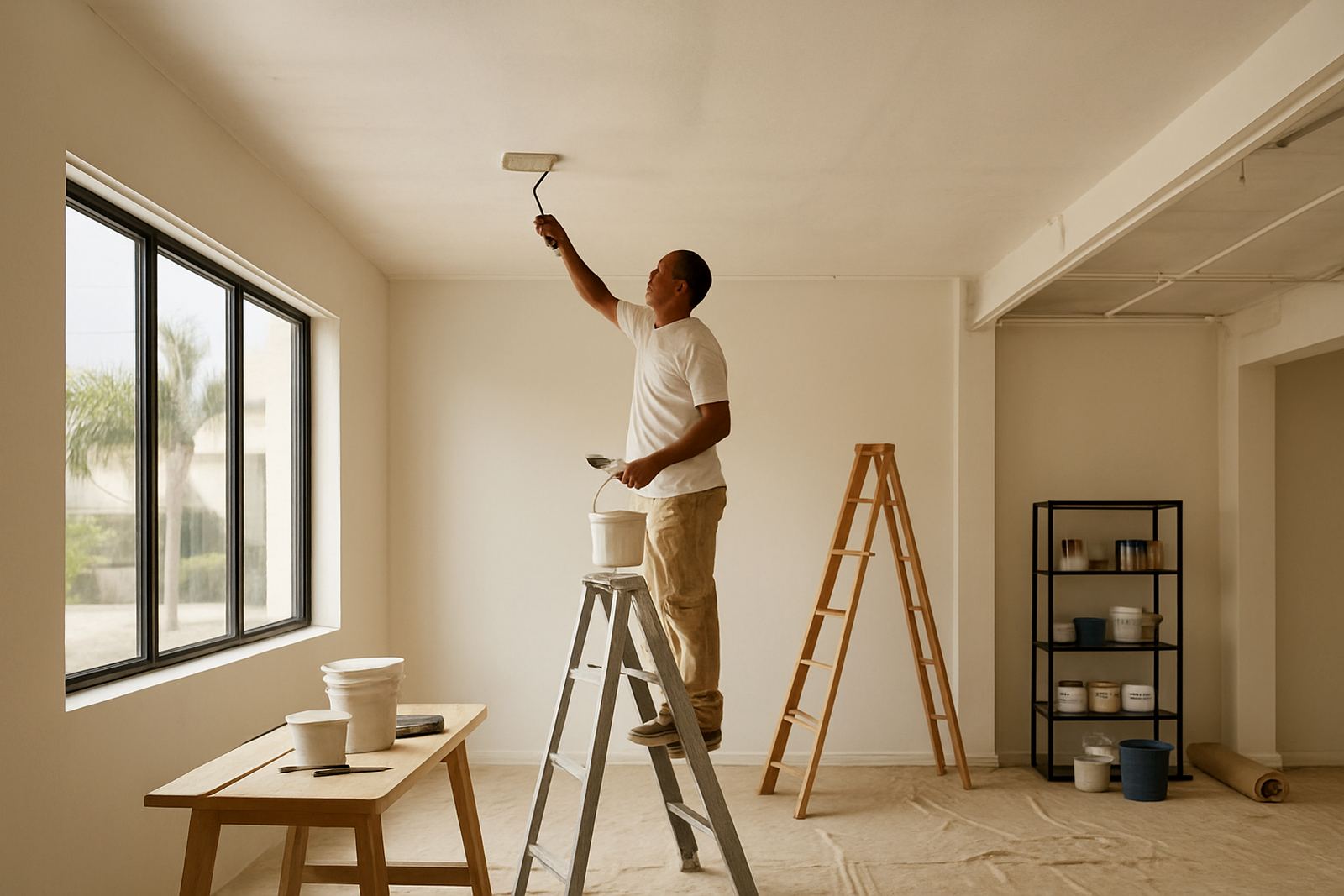
Every wall is different, but a practical exterior set-up usually includes cleaning, filling, sealing and application tools rather than paint alone. For a standard house or small commercial building, the kit often runs across rollers, extension poles, masonry brushes, crack filler, masking materials, sandpaper, a scraper, a sturdy tray and the correct primer or sealer. On larger jobs, contractors also need mixing pails, site-safe tarps and enough sample pots to test colours before committing to full drums.
- Masonry cleaner for dust, mould and chalky residue
- Crack filler or flexible repair compound for hairline movement
- Bonding primer or sealer for porous or patched areas
- Exterior topcoat suited to plaster, cement render or old paint
- Sample pots for colour checks in morning and afternoon light
- Touch-up tins for later maintenance on gates, boundary walls and corners
On coastal property, we normally recommend paying attention to salt build-up and keeping the system weather proof with the right prep. A small typo in prep can cost far more later, especially if water gets behind the finish.
How we plan the colour and wall layout
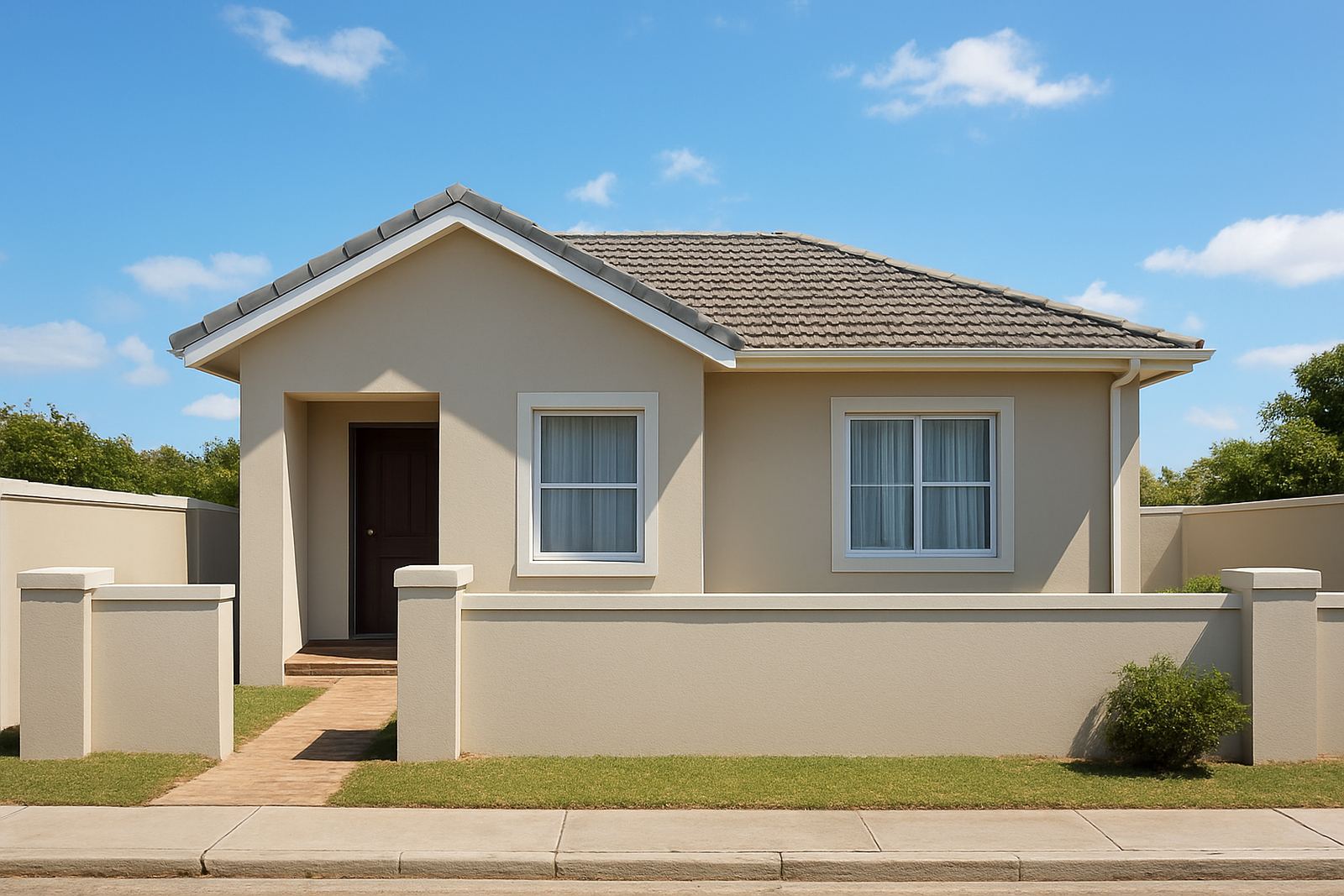
Outside walls are often seen from the street first, so the colour has to work with roof lines, paving, window frames and boundary walls. A pale neutral can open up a compact Walmer or Bellville property, while a warmer earth tone often suits older plaster homes or business premises that want a calmer look. Darker shades can work well on feature walls, but they need more care on south-facing areas and can show dust faster in windy spots.
Good planning starts with a sample pot, not a guess. We mix sample quantities so you can test two or three options on the actual wall. View them in full sun, shade and at dusk. If the wall sits next to red brick, aluminium or timber trim, the colour can read differently once it is up. We also look at maintenance planning. A colour that hides dust and minor patching may save money over a few years, even if it is not the boldest choice on day one.
- Test samples on at least two wall faces
- Check the finish next to existing roof and trim colours
- Allow for future touch-ups and added wall sections
- Choose lighter shades where heat build-up is a concern
Common exterior mistakes we help clients avoid
The most common mistake is applying a new coat over damp or unprepared plaster. Another is using the wrong primer on chalky walls, which leads to early failure. We also see people under-ordering paint and then trying to blend a later batch into the first one. On a big outside wall, that can show up as visible shade changes, especially if the wall gets strong sun. It is better to plan the full quantity early, with a little extra for future repairs.
Another issue is choosing a product for the wrong surface. Not every coating behaves the same on smooth render, roughcast, old painted plaster or repaired patches. In Gqeberha, wind-driven moisture can expose weak edges quickly. In Joburg, fast temperature changes can open small cracks. We help with repaint troubleshooting so you are not guessing after the first failure. If there is damp, salt damage or patchy previous work, we will talk through the cause before recommending the next step.
- Do not paint over damp walls
- Do not skip sealer on powdery surfaces
- Do not mix old and new tins without checking shade first
- Do not buy only the exact amount if the wall may need touch-ups later
Budget ranges for outside walls in Rand
Exterior budgets vary a lot because wall size, condition and access all affect the final cost. For a small boundary wall or a single feature exterior panel, material spend might start around R450 to R1 200 if the surface only needs light prep and a few litres of paint. A standard house exterior can sit anywhere from R2 500 to R9 000 in materials depending on square metres, number of coats and whether primer, crack repair and sample pots are needed.
For bigger homes, townhouses, rental blocks and commercial properties in areas like Korsten, Randburg or Sandton, bulk quantity planning matters. Once you move into multiple walls, repairs and colour consistency across several tins become important. It is often cheaper to order properly once than to return for emergency top-ups later. If you are working to a tight budget, we can help split the job into phases so the front boundary, main street-facing walls and repairs are handled first.
Labour is separate from materials, but a good paint system reduces repeat work. That is where the saving usually shows up.
Support for DIY owners, contractors and trade accounts
Some clients arrive with a photo, a chip of old paint or a wall that has already been patched twice. Others are contractors needing fast trade order support and clear quantities for a site in Bellville, Walmer or Newton Park. We handle both. Our team can help with colour consultation, sample pot mixing, product recommendations and contractor account help, so the job moves without unnecessary back-and-forth.
For larger outside wall projects, it helps to think in zones. Start with the most visible street-facing surfaces, then carry the colour around side walls and boundary sections. Keep records of the tint formula, finish and batch numbers for future maintenance. That makes later touch-ups simpler and keeps the property looking cared for over time. If you are planning a repaint before selling, before a tenant move-in, or after winter weather damage, speak to us early so the material order and colour matching are right from the start.