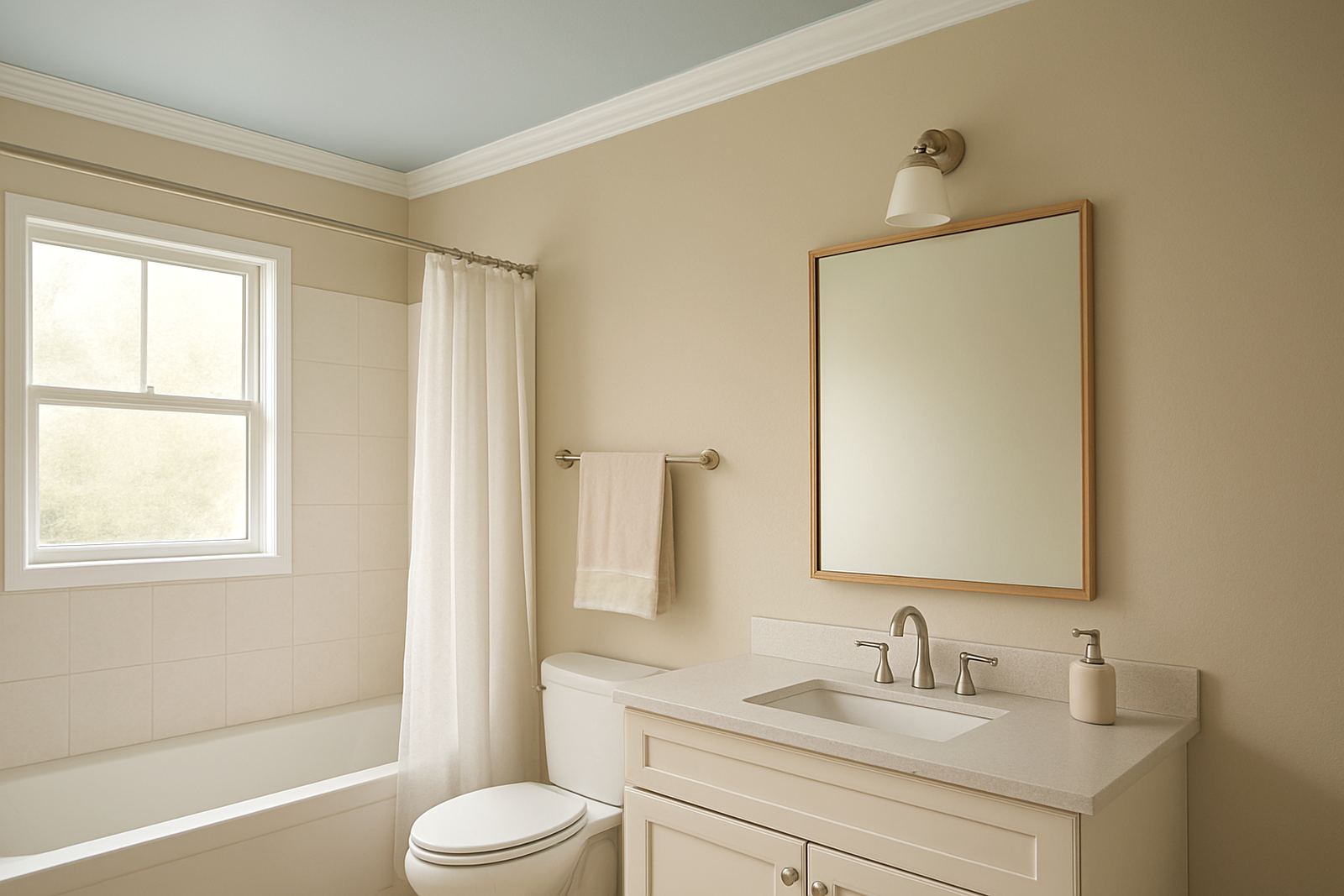

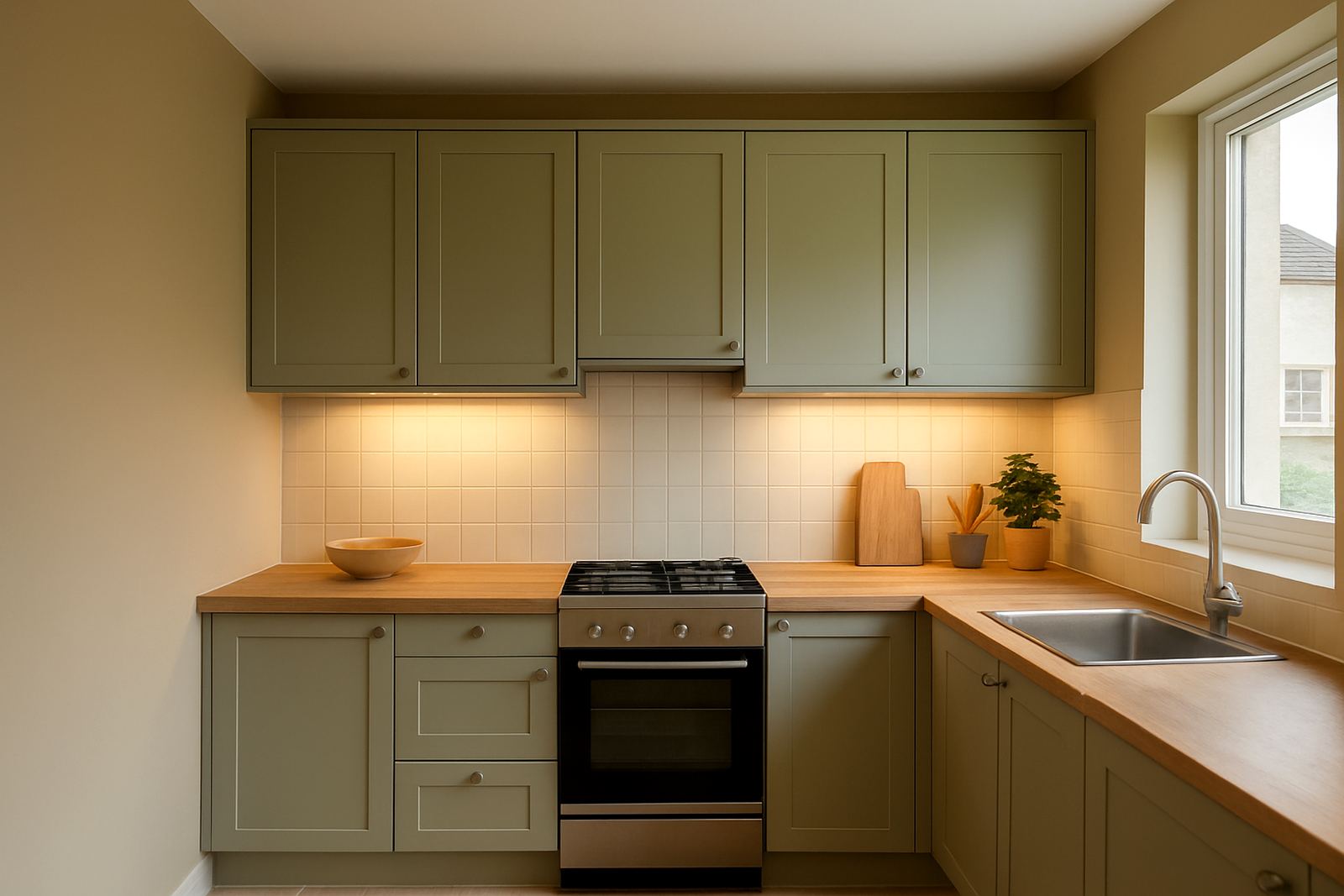
Kitchen spaces need more than a nice colour
A kitchen gets more punishment than most rooms. Cooking steam, grease in the air, fingerprints at handles, and frequent wiping all test the paint film. In Gqeberha, especially near the coast, you also need to think about humidity and salt air, which can affect drying times and the long-term look of a wall finish.
For busy family kitchens, rental units, guest houses and staff canteens, the aim is usually a finish that is easy to clean and can take a knock or two. The right advice saves money later because you avoid repainting too soon, or buying a product that looks fine on day one but marks up fast. A small test patch can help too, especially where daylight changes a lot through the morning.
Typical kitchen surfaces and what they need
Most kitchens have a mix of surfaces, and each one needs a bit of planning. Painted plaster walls, ceiling boards, skimmed patches, cupboards, splashback areas and trim all behave differently. If the kitchen has older repairs, smoke staining or water marks near a sink, those spots must be treated before any topcoat goes on.
- Painted walls that need washing down after cooking
- Ceilings exposed to steam and condensed moisture
- Wooden or melamine cupboard faces that need proper adhesion
- Door frames and skirtings that pick up shoes, mops and chair marks
- Areas near stoves, kettles and sinks that need better prep than the rest of the room
For cupboard resprays or hand-painted cabinetry, a careful surface clean and the correct bonding advice are critical. Rushing that stage is one of the most common reasons a kitchen job fails early.
Finish choices for easy cleaning and better wear
Kitchen walls usually do better with a washable finish rather than a very flat one. The goal is to remove marks without polishing the wall into shiny patches. For many homes, a low-sheen or soft sheen finish gives a good balance between appearance and cleanability. On cupboards and trim, a harder wearing product is often needed, especially where hands and cleaning cloths touch the surface every day.
Colour also matters. Light neutrals can make a compact kitchen in Korsten or Walmer feel brighter, while deeper feature tones can work well in larger open-plan spaces in Sandton or Bellville. If you are matching an existing tile, counter top or appliance finish, sample pot mixing is useful before you commit to the full order. It saves costly mistakes, and gives you a real view in morning and evening light.
- Low-sheen walls for practical wipe-downs
- Harder wearing finishes for cupboards and trims
- Stain-blocking advice where old water marks show through
- Sample pots for checking colour near counters and tiles
Planning a repaint around kitchen use
Kitchen work should be planned around how the room is used. In a family home, it may be easier to paint walls over a weekend and leave cupboard work for a longer break. In a restaurant kitchen, takeaway area or rental property, downtime matters and the sequence should be tighter. A small kitchen can still take two to three days if there are repairs, sanding, undercoats and drying time between coats.
Load-shedding can change the schedule too. If lights, extractors or heaters are off, drying and visibility can be affected. That matters when you are cutting in neatly around tiles, fittings and cupboard edges. For bigger jobs, bulk quantity planning helps prevent running short halfway through the job, which is a pain if you are working to a handover date.
- Clear the room and protect floors before any sanding starts
- Allow extra time for humidity, especially in coastal areas
- Check whether the stove and extractor need to be removed or masked
- Order enough product for walls, ceiling, trim and touch-ups in one go
Common mistakes that lead to early failure
Kitchen repaint problems are often preventable. The biggest one is painting over grease or cooking residue without proper cleaning. Another is skipping a test for old surface contamination, especially near extractor fans or stove surrounds. If the wall feels slightly powdery or chalky after cleaning, it will need more than a quick coat of paint.
People also choose the wrong sheen for the room or use a general wall product on cupboard faces that need a harder finish. Some try to save money by under-ordering primer or filler, then the final result ends up patchy. In a kitchen, patchy work stands out fast because light catches every join and repair. A neat system from prep through to topcoat gives a better result and it lasts longer too.
Budget ranges for kitchen paint jobs in Rand
Kitchen budgets vary by room size, prep work and whether you are painting walls only or doing cupboards and trim as well. A straightforward repaint of a small domestic kitchen may start at around R1 500 to R3 500 for materials if the surface is already sound. Add repairs, primer, better finishes and extra test pots, and that figure can climb to R4 500 or more. For cupboard work, the material cost is often higher because the prep and coating system needs to be more specific.
For trade customers, contractor account help and trade order support make it easier to plan quantities for multiple kitchens at once. That is useful for landlords with several units, builders doing turnarounds, or decorators handling a full house repaint. If you are working to a tight budget, colour consultation can help you avoid repeat buys and wasted tinting. A careful order is usually cheaper than fixing a wrong colour later.
- Small walls-only kitchen repaint: about R1 500 to R3 500 in materials
- Mid-range kitchen with repairs and better finish: about R3 500 to R6 500
- Cabinet and trim projects: often R4 500 and up depending on prep
- Sample pots and colour matching are a low-cost step before full mixing
Where ColouRight Paints fits in
From Korsten in Gqeberha to Walmer, Newton Park, Sandton, Randburg and Bellville, ColouRight Paints supports kitchen projects with colour matching, custom tinting, sample pot mixing and product recommendations that suit local conditions. If you are not sure whether your kitchen needs a washable wall finish, a stronger cupboard coating or better prep products, the team can talk through the options in plain terms.
For homeowners, that means less guesswork. For decorators and contractors, it means better planning, fewer delays and clearer quantities before the work starts. Whether the job is a flat in town, a family home, or a small business kitchen, the right advice on surfaces and cleaning needs makes the final finish look right and hold up longer.