
Bathroom Conditions That Need the Right Paint
Bathrooms are harder on paint than most rooms. Hot showers, poor ventilation, splashing near basins and toilet cisterns, plus coastal humidity in places like Gqeberha and Cape Town, can all lead to bubbling, staining or early failure if the wrong product is used.
For family homes, guest toilets and small business washrooms, the best starting point is to match the coating to the room use. A main bathroom with daily showers needs more care than a seldom-used cloakroom. In homes where windows stay shut in winter or extractor fans are weak, extra attention should go into primer choice, surface drying time and finish selection.
Our team can help with paint colour matching for bathrooms so the shade you choose still looks right under cool white lights, morning sun or low light in a narrow room. That matters more than many people expect because a pale cream can read yellow, while a grey may look blue once it’s on the wall.
Recommended Paint Set for Walls, Ceilings and Trim
A sensible bathroom paint set usually includes a washable interior wall coating, a moisture-tolerant ceiling finish, primer where needed, and the right caulks or fillers for cracks around fittings. If the room has old water marks, flaking patches or previous damp, surface prep is just as important as the topcoat.
- Washable interior paint for walls in a low sheen or satin finish
- Ceiling paint that resists light moisture and does not yellow too quickly
- Primer for bare plaster, repaired areas or stained patches
- Filler for pinholes, hairline cracks and old screw holes
- Masking, rollers, angled brushes and tray liners for neat work
- Sandpaper, cleaning detergent and mould treatment for problem areas
For tight bathrooms, a smaller roller setup is often easier to control around taps, mirrors and shower frames. If you are repainting a flat in Sandton, a family home in Walmer or a rental in Bellville, we can recommend the right pack sizes so you do not overbuy. A 5 litre tin is often enough for a standard bathroom wall area, though large en suites or full-tiled feature walls may need more.
Colour Choices That Work in Small or Window-Less Bathrooms
Bathrooms are not the place to guess. A shade that looks soft and calm on a sample card may feel cold in a north-facing room, or too dark in a bathroom with one small window. That is why sample pot mixing is useful before you commit.
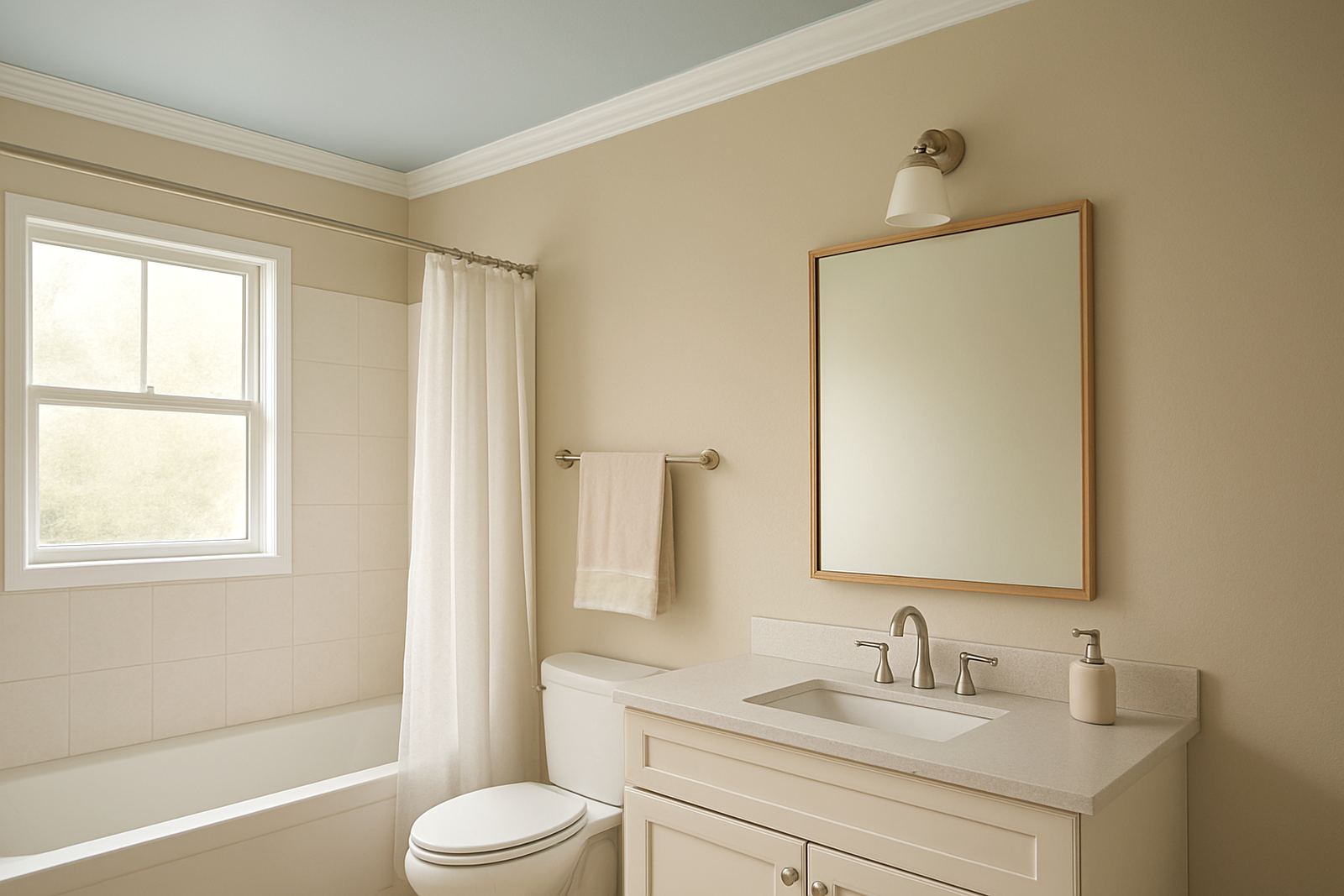
Light neutrals, warm whites and muted green-grey tones are common choices because they keep the room feeling clean without showing every mark. In homes with strong natural light, you can usually go a touch richer. In smaller spaces, a mid-tone can work on one feature wall, but it is easy to overdo it and make the room feel cramped.
- Use lighter colours for small guest bathrooms and narrow passages off the bathroom
- Choose warmer whites where the room feels cold in winter
- Go for soft greys or stone tones if you want a calm, practical look
- Avoid very dark colours unless the room has good light and good extraction
Our colour consultation service can help you compare tones under real conditions. Bring a tile off-cut, a vanity sample or even a photo of the room and we can guide you on what will sit well with your fittings and lighting. It saves time, and a few costly repaints too.
Planning the Job Around Moisture and Drying Time
Bathroom painting is as much about timing as it is about the product. If the room is used every morning, plan around a window where walls can dry properly and stay dry for at least a day. In damp weather or coastal areas, that dry time can stretch longer than expected.
Good layout planning starts with clearing the room, covering sanitary fittings and deciding whether to do walls, ceiling and trim in one go or over two days. If there is visible mould, it must be treated before any paint goes on. Painting over it only hides the problem for a short while, then it comes back.
For older homes in areas like Korsten or Randburg, check for patch repairs around old pipework and shower edges. These spots often need extra sanding and primer. A neat repaint can still fail if the substrate is not sound. It sounds simple, but many bathroom jobs fail because someone rushed the prep and tried to paint too soon after cleaning.
Common Mistakes That Shorten Bathroom Paint Life
The biggest mistake is using ordinary wall paint where a moisture-tolerant finish is needed. The second is skipping prep because the room looks clean. Soap film, dust and old silicone residue can stop new paint from sticking properly.
Other common errors include poor ventilation during and after painting, painting over damp plaster, and using too-glossy a finish that shows every mark on the wall. A bathroom also needs the right cleaning after the job, not a harsh scrub on day one. Let the coating cure first.
- Do not paint over damp walls or fresh plaster
- Do not ignore mould at ceilings or behind towel rails
- Do not use a finish that marks easily in a high-touch area
- Do not skip primer where stain or patching is present
If you are a contractor handling multiple unit bathrooms, trade order support and bulk quantity planning can keep the job moving. We also help with repaint troubleshooting and contractor account help for repeat work. That is handy when you are trying to keep a schedule in a busy block or rental turnaround.
Budget Ranges for Bathroom Paint Projects in Rand
Bathroom budgets vary depending on room size, surface condition and whether you are painting only the walls or the whole room. A small cloakroom in decent condition may need only a modest spend on paint and basic prep products, while a main bathroom with damp patches and ceiling repairs can cost quite a bit more.
As a rough guide, many DIY bathroom paint jobs fall in the R450 to R1,500 range for paint, filler, primer and small tools. Medium rooms with extra prep can land around R1,500 to R3,500. Larger or problem bathrooms, especially if there is mould treatment, patch repair and more than one coat, can run from R3,500 upward depending on the finish and quantity needed.
For trade customers, bulk planning can reduce waste and keep the colour consistent across multiple units. If you need matching between batches or help estimating coverage for ceilings, walls and trim, send the room sizes and we can assist with product recommendations. It saves you from buying too much or running short halfway through.