
Planning Paint Before Hand-over Day
On a new build, paint work often starts before the moving boxes arrive, and the order matters. Walls, ceilings, woodwork, cornices, doors and feature areas should be planned together so you do not end up repainting after electricians, cupboard fitters or tilers have left marks behind.
In Gqeberha, Joburg and Cape Town, we often see the same issue on finishing day: everyone is working fast, but nobody has matched the colours or counted the litres properly. A simple paint schedule helps. Note each room, the surface type, the sheen level and whether it is a first coat, undercoat or final finish. That way you can order once and avoid delays when the last room still needs a touch-up.
Typical Equipment for a New Build Paint Programme
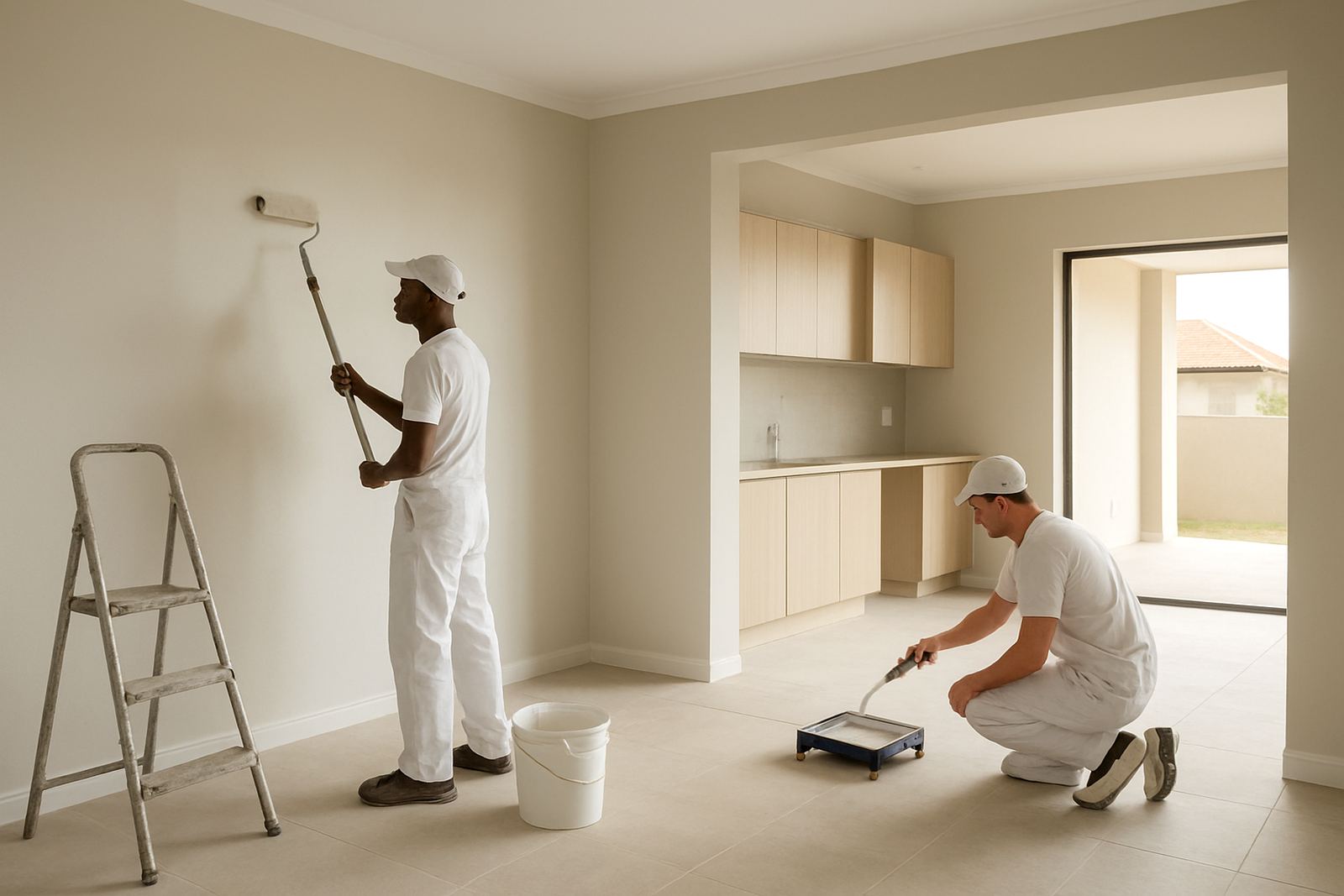
A proper new build paint set-up depends on the surface, the height of the room and how much detail is in the trim. For most homes and smaller commercial spaces, the usual equipment includes rollers, extension poles, angled brushes, paint trays, drop sheets, masking tape, fillers, sanding blocks and dust masks. On larger sites, you may also need spray equipment, scissor lift access for high walls, and extra mixing buckets for tint control.
- Interior walls and ceilings: standard rollers with medium and short pile sleeves
- Plaster and skimmed finishes: filler, sealing primer and sanding materials
- Doors and trim: fine brushes, small rollers and smooth finish products
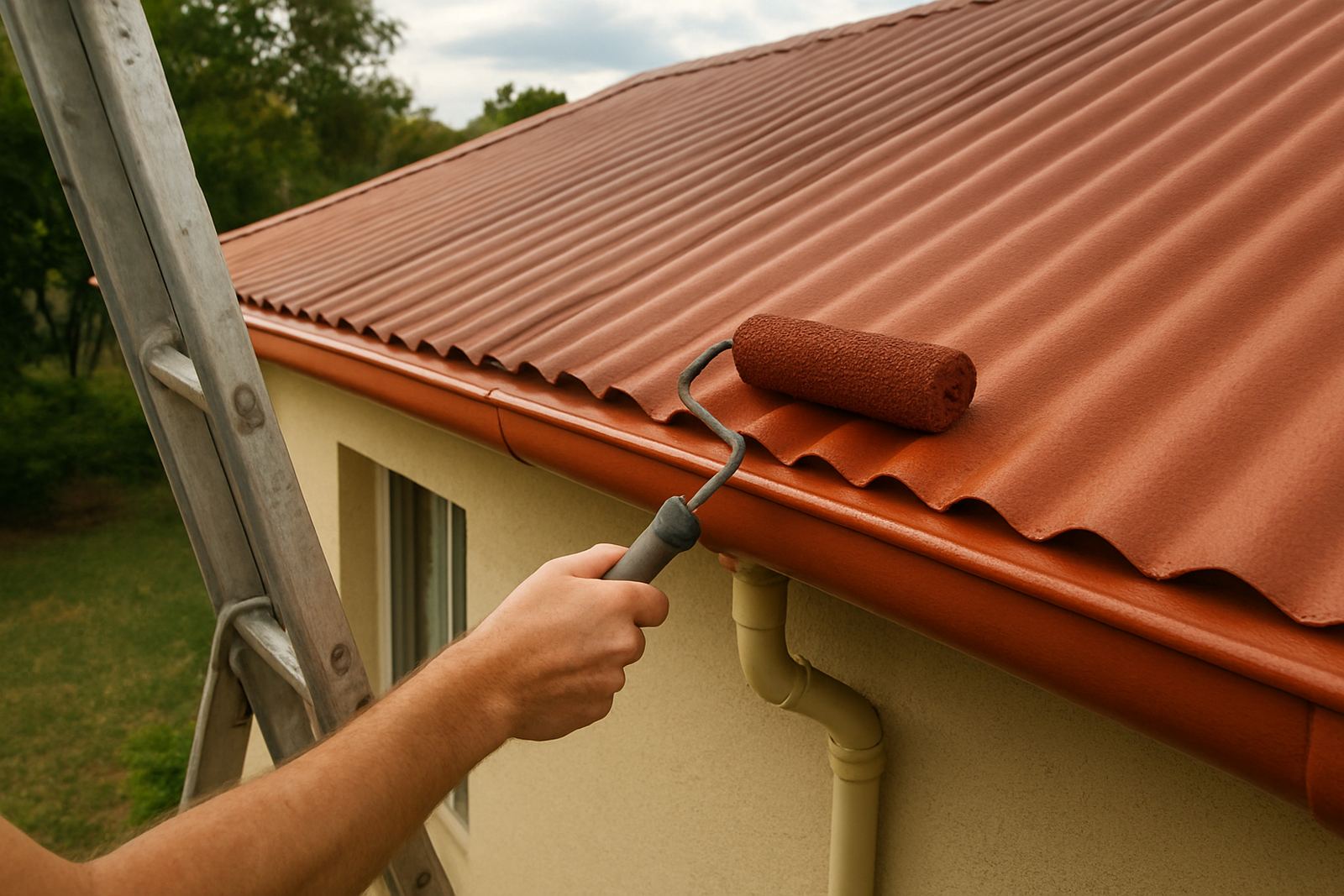
- Exterior walls: weather-rated coatings and stronger application gear
- Touch-up stage: sample pots for final colour checks in natural light
For coastal areas around Gqeberha and Cape Town, we also look at humidity and salt in the air. That can affect drying times and the final finish, so the product choice should suit the site and not just the colour card.
Colour Matching for Empty Rooms and Hard Light
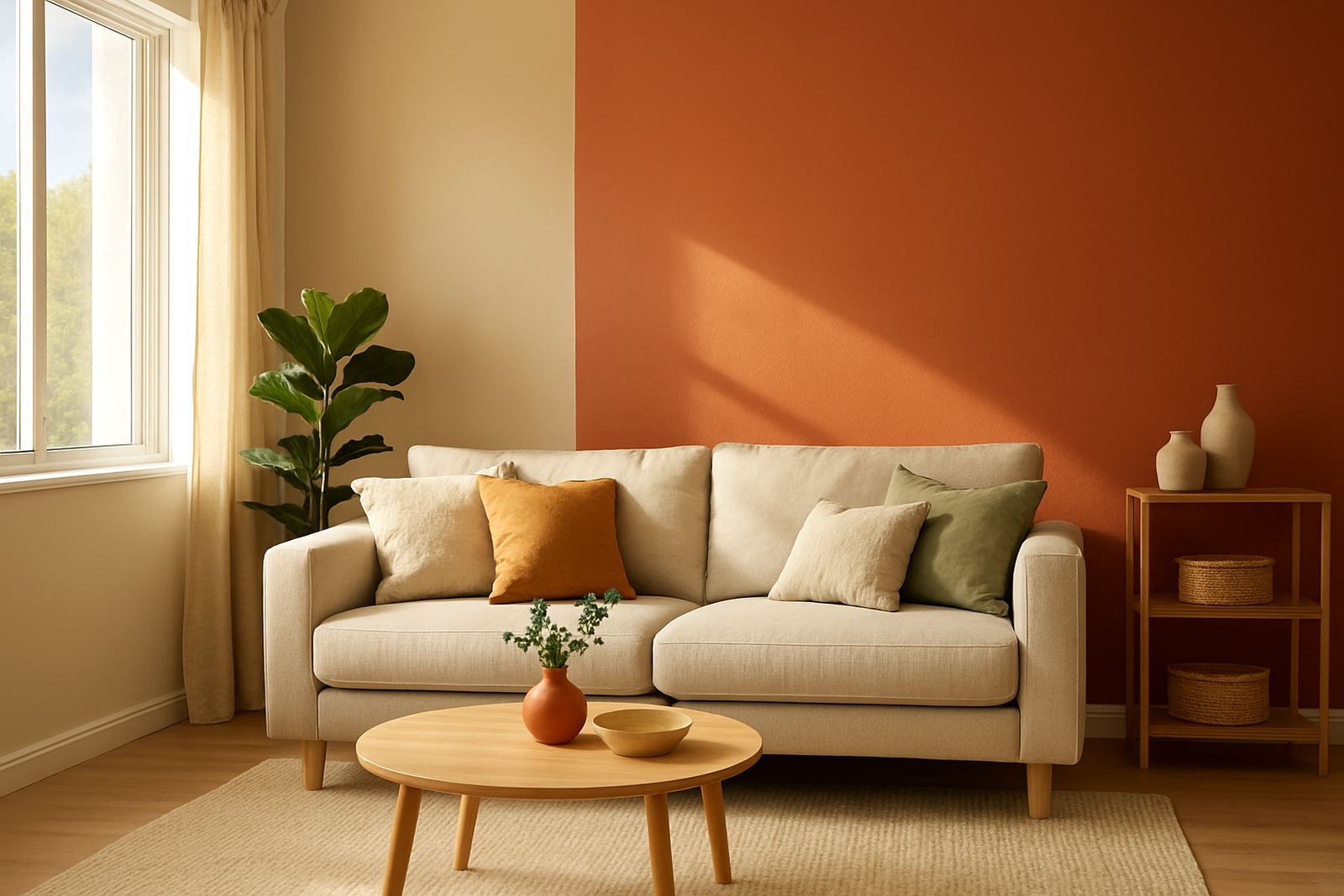
Fresh plaster, large windows and open-plan living areas can make a colour look different from one wall to the next. That is why colour matching is not only for old paint repairs. On a new build, we can match against tiles, cupboards, roofing, aluminium frames or fabrics so the paint works with the rest of the finishes.
Sample pots are useful when the client wants to test a grey, cream or muted green in the real room before committing to the full order. The light in Walmer is not the same as in Sandton, and a north-facing room in Bellville can make a colour read warmer than expected. We recommend testing at least two tones if the space has strong sun, shadow or polished floor surfaces.
- Test sample paint on at least 1 square metre per colour
- Check it in morning light and again in late afternoon
- Keep samples near skirtings, tiles and cupboard faces
- Allow for the difference between matte, low sheen and satin finishes
Layout Advice for Homes, Flats and Commercial Fit-outs
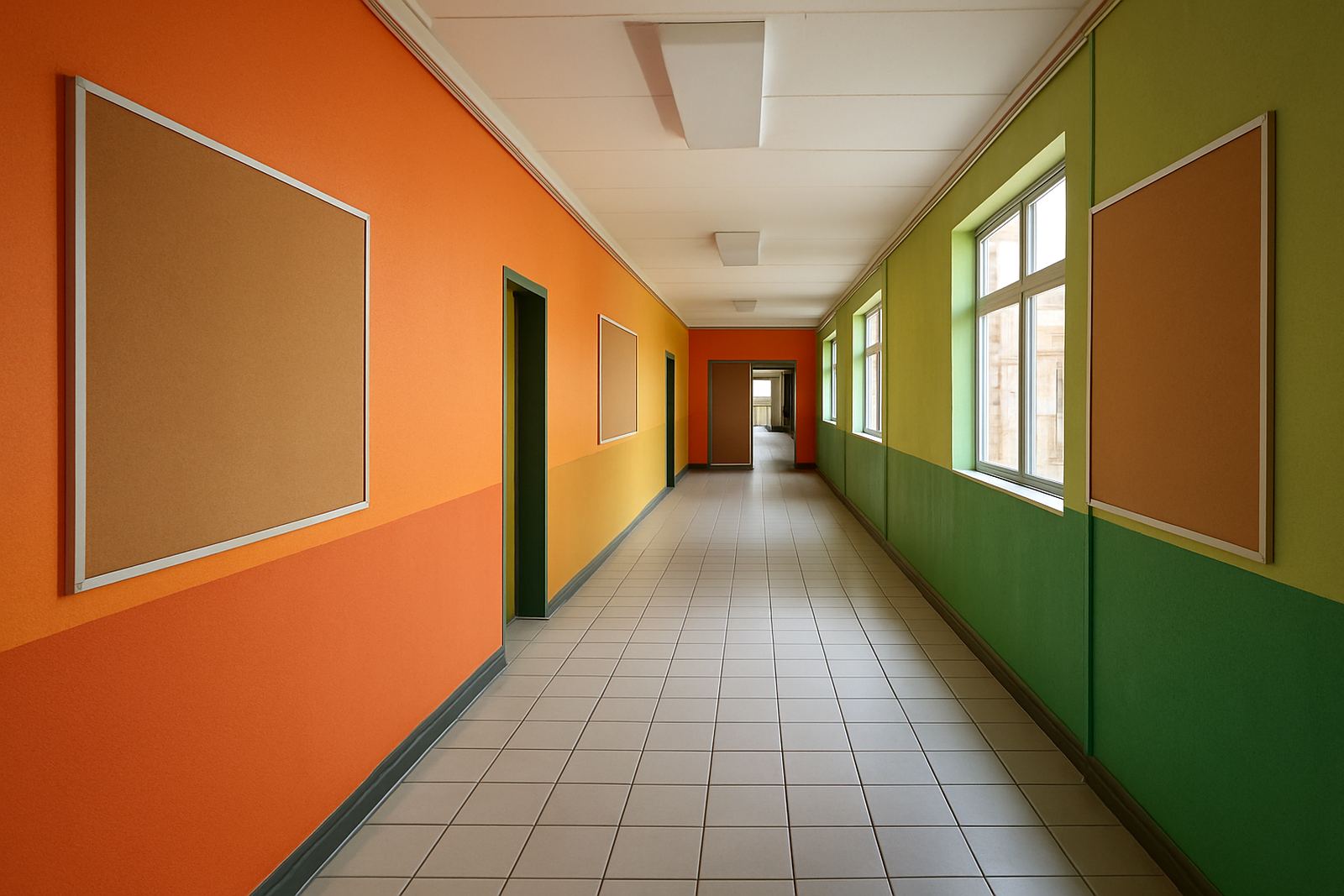
Good layout advice starts with how the building will be used. In a family home, we often suggest a more forgiving finish in passages, living rooms and children’s rooms, while bathrooms and kitchens need coatings that handle steam and frequent cleaning. In commercial spaces, traffic marks, fire escape routes and signage areas need to be considered before the first coat goes on.
For contractors and site managers, a room-by-room plan helps with labour and drying time. Paint the ceilings first, then walls, then trim and doors. Leave enough time between coats for the surface to cure properly, especially in cooler inland weather or when load-shedding affects ventilation and site timing. Trying to rush the second coat usually leads to lap marks and patchy coverage.
If you are fitting out a retail shop, office or light industrial space, it also pays to separate public areas from back-of-house areas. That makes it easier to order the right quantities and keep the paint register simple for later maintenance.
Common Mistakes We See on New Builds
New builds often look straightforward until the final finishes begin. The biggest mistakes are usually about timing, not colour.
- Buying paint before the plaster is fully dry
- Skipping sealing primer on porous walls
- Not allowing for extra paint on feature walls and repairs
- Matching colour under fluorescent light only
- Mixing different sheen levels in the same room by mistake
- Under-ordering by trying to calculate to the last half-litre
Another common issue is forgetting contractor support on bulk orders. If a build is moving in phases, you may need extra stock later for snagging and final touch-ups. We can help plan that up front so the same colour stays consistent across the full job, even if the work stretches over a few weeks.
Budget Ranges in Rand for New Build Finishes
Budget depends on size, surface condition and the level of finish needed. A small home repaint before occupation may only need a modest paint budget, while a full new build with ceilings, walls, trim and feature colours can run much higher. As a practical guide, interior paint-only budgets for a typical two to three bedroom home often start from around R3,500 to R12,000 for basic supply levels, while larger homes or higher spec finishes can move well above that.
For commercial spaces, the budget may be driven by square metres, access requirements and whether the job includes protective coatings or multiple colour zones. Trade customers usually plan per phase, which makes it easier to control spend and avoid holding too much stock on site. If the project includes exterior work, allow extra for weather-resistant coatings and surface prep materials.
We advise setting aside a small contingency of 10 percent to 15 percent. That covers touch-ups, an extra sample pot, or the odd wall that needs more product than planned.