
What Boundary Walls Need To Handle Every Day
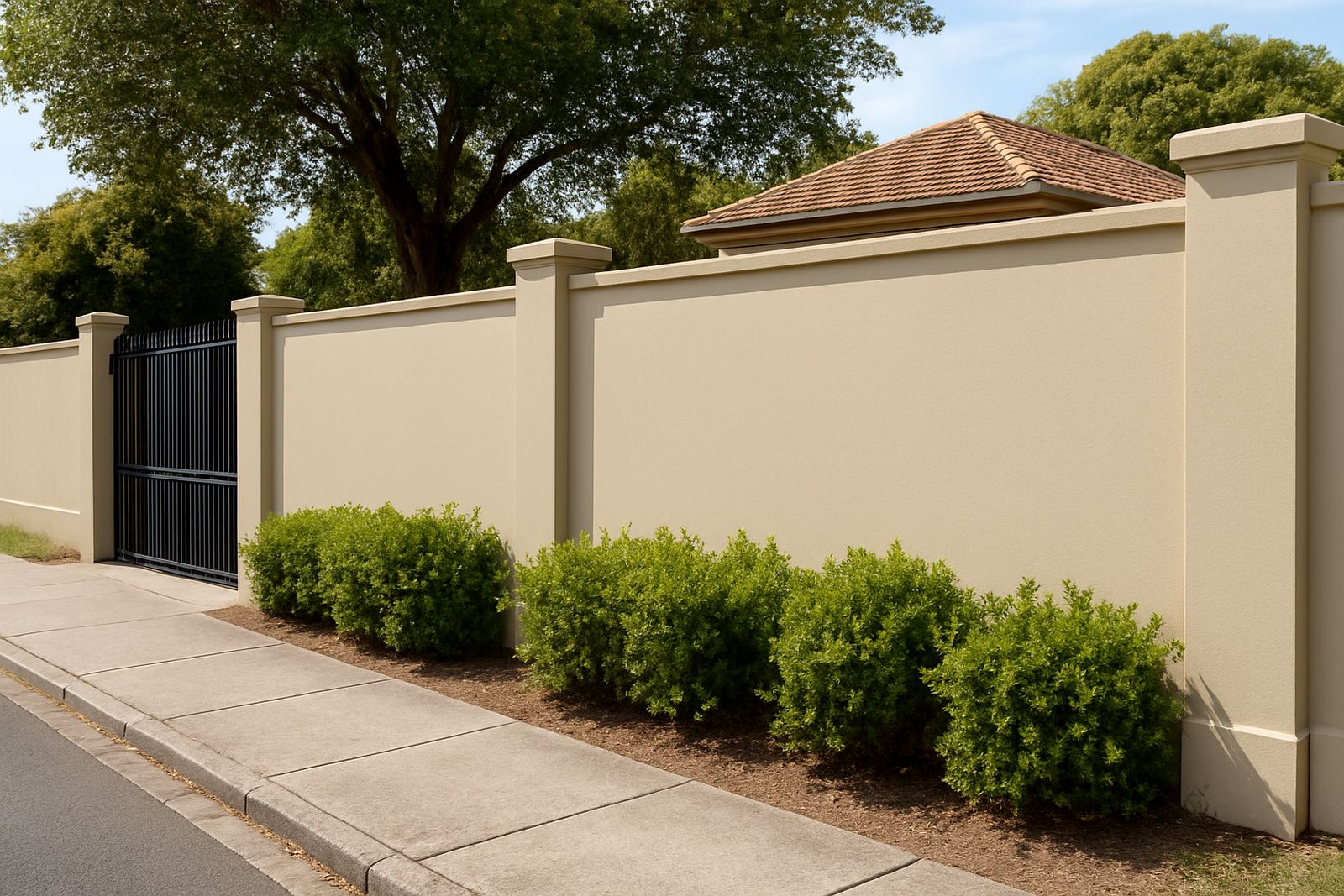
A boundary wall sits on the edge of the property, so it takes more punishment than an inside wall. Gqeberha sea air, summer heat, dust, splashing from storms and general roadside grime all show up fast on a poorly chosen coating. In places like Walmer, Newton Park and Korsten, people often want a finish that looks clean from the street but does not need constant touching up.
For this use-case, the aim is usually simple: decent colour retention, good adhesion to plaster or masonry, and a finish that can be washed down without leaving patch marks. If the wall is new, damp, cracked or painted over with chalky old paint, the coating choice changes. Getting the prep right saves money later, and it is where many boundary wall jobs go wrong.
Typical Coating Choices For A Neat Street-Facing Wall
Most boundary walls are finished with exterior masonry paint, sometimes with a primer or sealer first. On sound plaster, a quality exterior coating in a matt or low-sheen finish is usually enough. A smoother finish can help with dirt pickup, while a very glossy finish may show roller marks and patching more easily. For older walls with hairline cracks, a flexible exterior coating can help reduce the look of fine movement.
- Exterior masonry paint for standard plastered walls
- Primer or sealer for porous, powdery or newly plastered surfaces
- Crack-filling compound for hairline cracks and sanded repairs
- Mould or algae treatment for shaded walls and coastal areas
- Matching sample pots for colour checks before full quantity tinting
At ColouRight Paints, paint colour matching and custom tinting are useful when a client wants the boundary wall to tie in with the house fascia, gate, paving or pillars. A sample pot is worth the small cost, especially when the wall faces harsh sun in Sandton or damp coastal air in Bellville and Gqeberha.
Planning The Layout Before You Buy Paint
Boundary wall planning starts with measurements, not with the colour card. Measure wall height, length, return walls, pillars and any gate posts. Leave extra for rough plaster, texture and touch-ups. A wall with many corners or decorative bands can use more paint than expected, and it is common for first-time buyers to underorder by 10 to 15 percent.
Think about what must be painted and what must stay as-is. Security spikes, metal gates, steel frames and capped sections may need separate coatings. If the wall borders a public pavement or a neighbour’s drive, work out access and drying time so nobody brushes against wet paint. In busy spots around Korsten or Randburg, this matters more than people think.
- Check for cracks, salt bloom, flaking paint and damp patches first
- Confirm whether the wall is bare plaster, previously painted, or patched
- Measure both sides if the full boundary needs coating
- Plan for a primer coat where the surface is porous or uneven
- Allow extra paint for cut-ins around pillars, coping and features
Common Mistakes On Boundary Wall Jobs
The biggest mistake is painting over a dusty or chalky surface and hoping the new coat will hold. It may look fine for a few weeks, then start to powder or peel. Another common problem is using interior paint outside because it is on hand. That usually fails under sunlight and rain, especially on west-facing walls that take hard afternoon heat.
People also mix too many colours by eye without testing them in daylight. A pale grey that looked calm in the shop can turn blue on a street wall in bright sun. Dark shades can look smart at first but they may fade faster and show dust more clearly. On coastal jobs, skipping mould treatment is another easy mistake, and the green staining comes back quickly. A small typo in the spec sheet or a rushed order can also mean buying the wrong tin size, which costs time and extra Rand.
Budget Ranges For Boundary Wall Painting
Budget depends on wall size, surface condition and whether the job needs primer, crack repair or special colour tinting. For a small wall section or a touch-up around a frontage, material costs may start around R450 to R1 200. A medium residential boundary wall, including primer and two coats of exterior paint, often lands between R1 500 and R4 500 in materials, depending on product grade and coverage.
Larger perimeter walls, taller boundary walls or jobs that need repairs and multiple colour zones can run from R5 000 to R15 000 or more in materials. Labour, scaffolding and prep are separate if a contractor is involved. Trade customers in Gqeberha, Joburg and Cape Town often ask for bulk quantity planning so the colour stays consistent across the whole run. That is a smart move when the wall is long and you do not want a visible shade shift half way through.
How ColouRight Paints Helps With Boundary Walls
ColouRight Paints supports boundary wall projects with paint colour matching, sample pot mixing, surface prep advice and product recommendations that suit local conditions. If you are working on a home in Walmer, a rental in Newton Park, a unit in Bellville or a commercial property in Sandton, the same practical basics apply: know the surface, test the colour, and choose a coating that suits sun, rain and daily wear.
The Korsten base is handy for Gqeberha customers needing quick paint matching and contractor account help, while the branches and service areas in Joburg and Cape Town help keep trade orders moving. If you are not sure whether a wall needs a sealer, a filler or just a fresh coat, ask before buying. That is usually cheaper than repainting a week later.
- Paint colour matching for boundary wall shades and feature bands
- Custom tinting for exact property matching
- Sample pot mixing for daylight testing before full purchase
- Trade order support and bulk quantity planning for larger walls
- Repaint troubleshooting for peeling, damp or faded sections