
Start With Paint That Is Still Worth Keeping
Before you put a tin away, check that the paint is still in good condition. If it has already gone lumpy, has a sour smell, or has dried skin mixed through it, it is better to discard it than keep fighting with it later. Good leftover paint should still stir back to a smooth, even consistency.
For homes in Gqeberha, especially near the coast, moisture can creep into tins left open too long. In hotter inland areas like Sandton or Randburg, high temperatures can also shorten the life of paint that is not sealed properly. The rule is simple: only store paint that was closed up quickly after use and has not been contaminated with dust, water or brush debris.
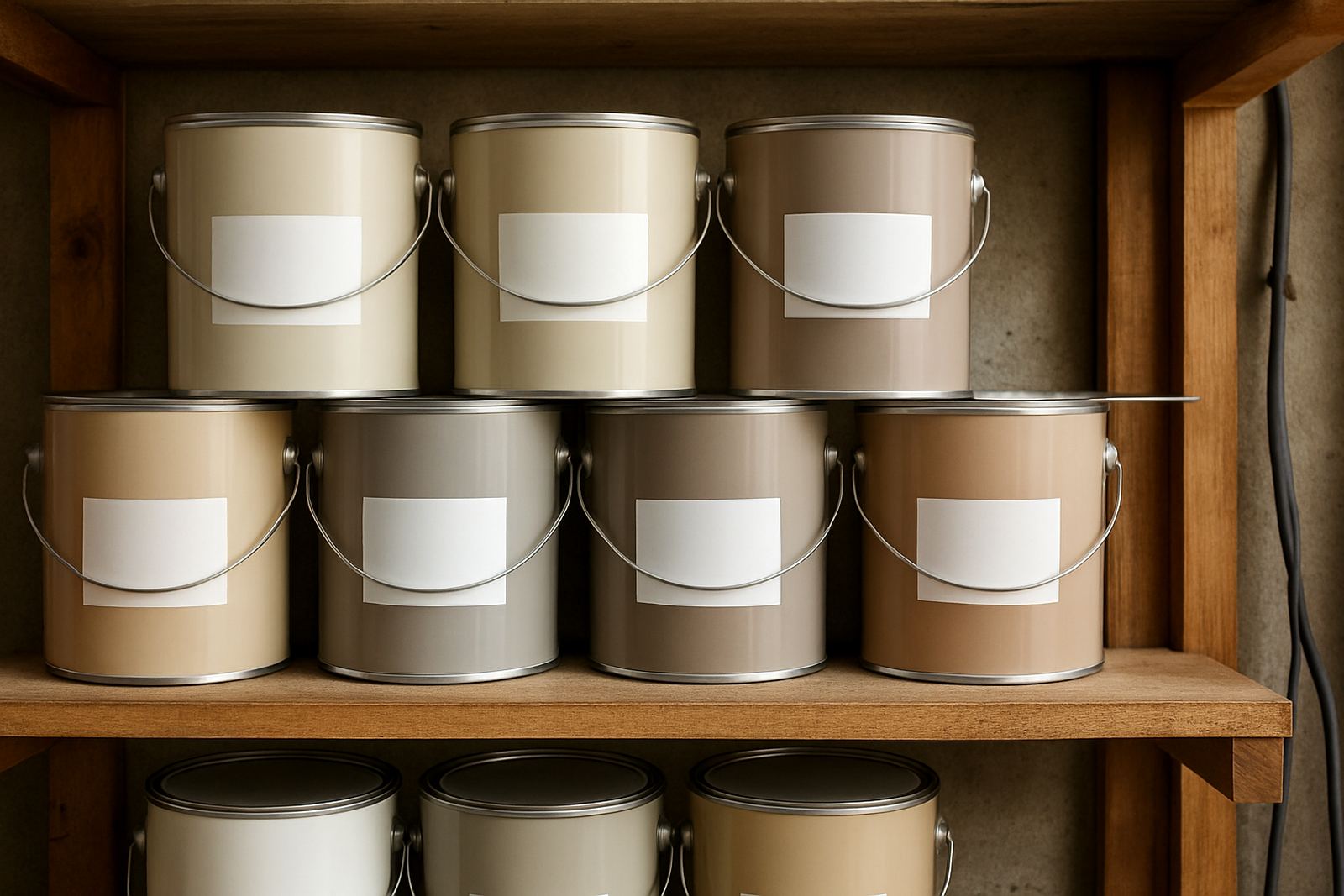
- Keep separate tins for each colour and finish.
- Do not pour used paint back into a tin if it has bits of plaster, sand or rust in it.
- If the paint was mixed with a custom tint, write down the colour details before storing it.
Use the Smallest Air-Tight Container You Can Find
Paint keeps better when there is less air in the container. If you only have half a litre left from a 5 litre tin, move it into a smaller clean container with a tight lid. Less air means less chance of the paint skinning over, which is especially useful for water-based paint in warm weather.
Clean glass jars, small plastic pails and purpose-made paint tins all work if the lid seals properly. Wipe the rim before closing it, because dried paint on the lip can let air in. A lid that does not click or press down fully is asking for trouble, and you will probably find the paint gone thick when you need it most.
- Leave as little empty space as possible at the top.
- Close the lid firmly and tap around the edge if needed.
- Store the smaller container inside a bigger sealed box if you expect dust or damp.
Label It Properly While The Colour Is Fresh
Do not trust memory. A month from now, that cream wall colour and the slightly warmer cream on the passage ceiling will all start to look the same. Write the room name, colour name or code, finish, date opened, and where it was used. If you had custom tinting done, note that too.
For contractors and body corporates, labels are even more useful because they help with repeat jobs and repaint troubleshooting. If a wall in Walmer gets a scuff after a school holiday rental changes hands, you will want the exact note of what was applied instead of guessing. It saves time, and avoids one of those awkward jobs where the patch is almost right but not quite.
- Use a waterproof marker on masking tape or a label.
- Write the date you opened the tin and the date you last stirred it.
- Keep a small sample card if you need to match later.
Choose A Storage Spot That Stays Cool And Dry
The best place for leftover paint is a cool, dry spot out of direct sun. Avoid the back of a bakkie, a hot shed roof space, or a patch near a geyser pipe that warms up during the day. Large temperature swings can cause the contents to separate faster and make the lid harder to trust.
In coastal areas like Gqeberha, Bellville and parts of Cape Town, humidity is often the enemy. In inland service areas, dust is just as bad. A cupboard, storeroom, or lockable shelf works well, as long as it is away from food, cleaning chemicals and any open flame. If you keep multiple tins, place them on a tray or cardboard so they do not rust underneath.
For businesses, remember that municipal rules and workplace safety matter. Keep liquids stored neatly, clearly marked, and away from walkways where someone could knock a tin over during load-shedding checks or after-hours cleaning.
Stir Gently Before You Touch Up A Wall
When you need the paint again, do not shake the container hard. Open it and stir from the bottom up until the colour and texture are even. A settled paint tin may look fine on top but still have thicker material at the base.
If the paint has formed a skin, lift it off rather than mixing it into the paint. If there are small lumps that will not break down, strain the paint before use or do a test patch first. For touch-ups on high-visibility walls, a short test on the back of a door or inside a cupboard can save a lot of regret.
- Stir with a clean stick, not a dirty brush.
- Check sheen and colour in daylight if possible.
- Test the touch-up after it dries, because wet paint can fool you.
Know When Leftover Paint Has Reached The End
Even well-stored paint does not last forever. If the smell has changed, the texture stays grainy, or the finish dries in patches instead of forming a proper coat, it is time to replace it. Old paint can also give you a slight mismatch even if the original colour was right, especially if the wall has faded in sun or sea air.
For a small repair in Newton Park or a trade job in Bellville, it is usually better to mix fresh paint in the same colour again rather than gamble with a tin that has been sitting for years. If you are unsure, bring the sample or tin details for colour matching and product recommendations. That way you can get a proper touch-up without wasting a day on trial and error.
Good storage buys you a little more life from every tin, but it is not magic. The cleaner the lid, the tighter the seal and the cooler the storage space, the more likely you are to have paint ready when a scuff or chip shows up.