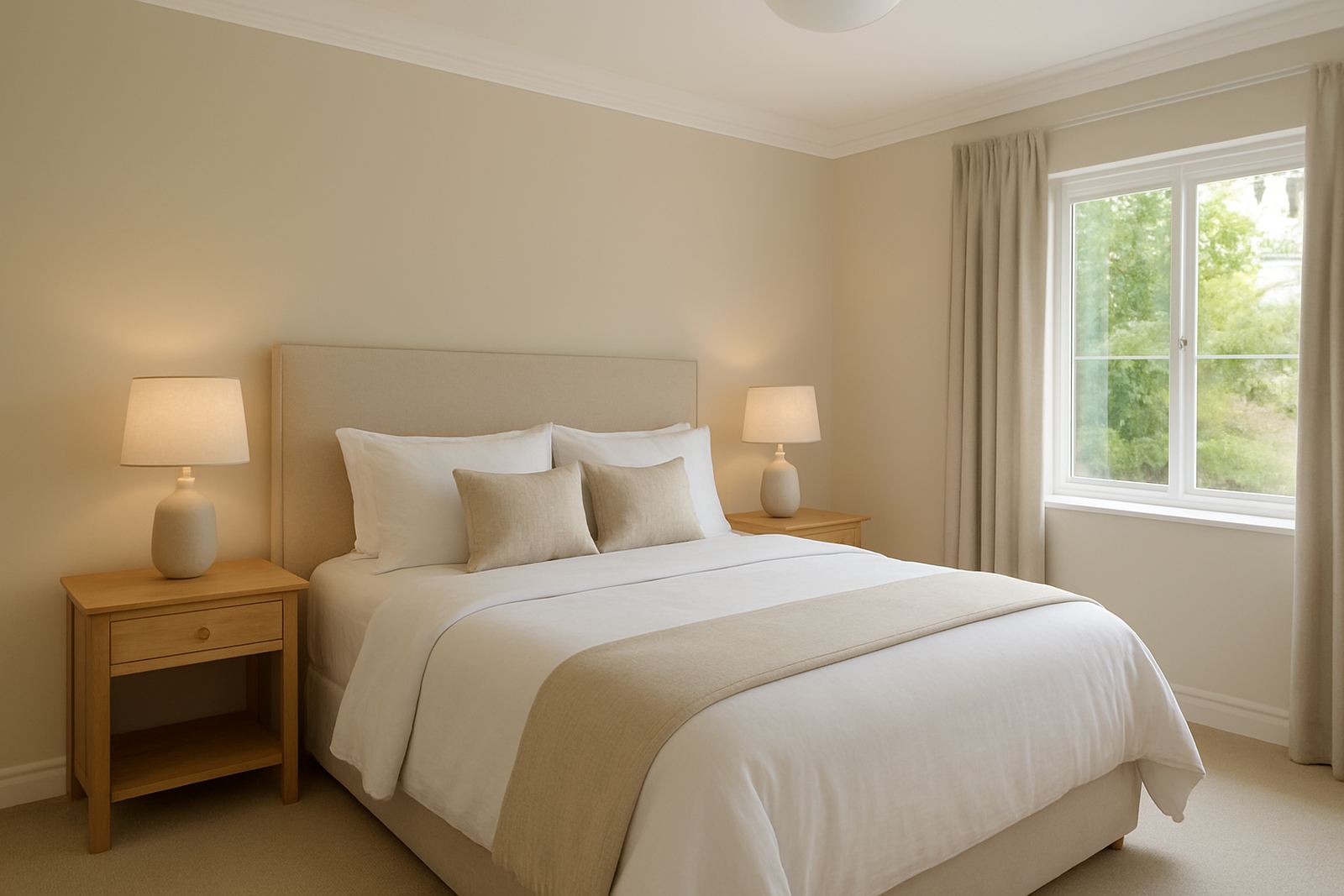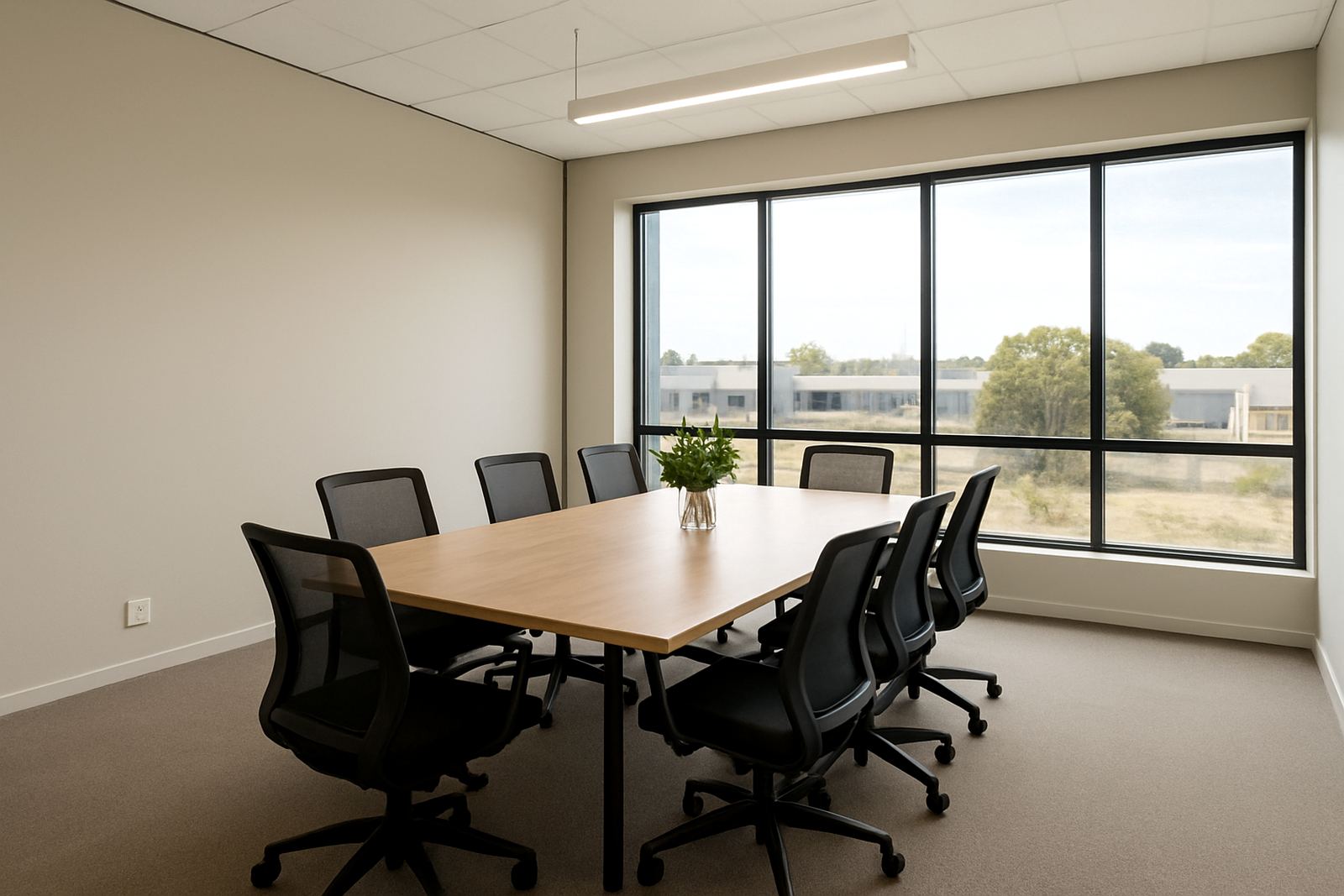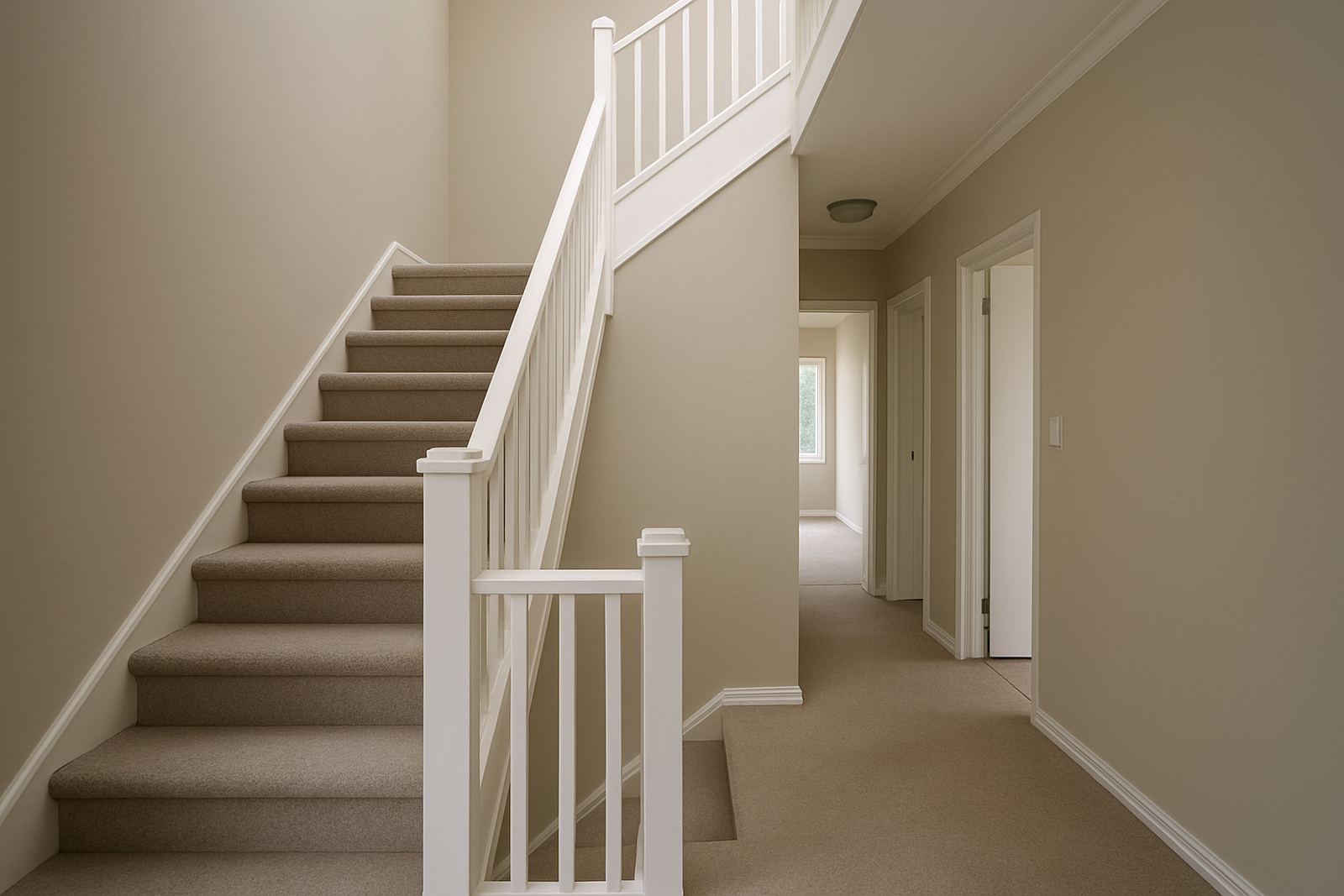

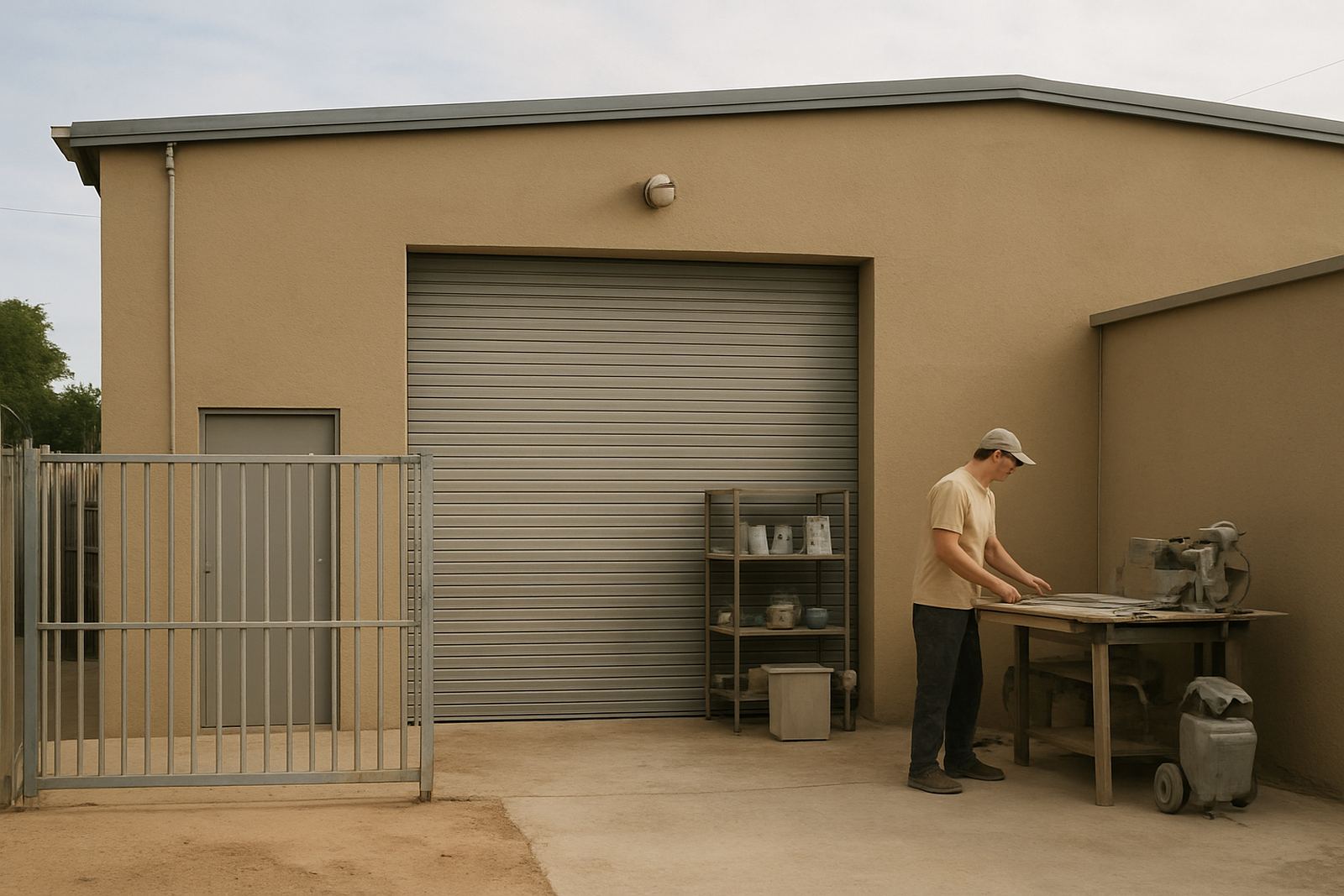
A working exterior in Korsten needed practical protection
The client was a local workshop owner in Korsten, Gqeberha, with a building that faces traffic dust, coastal moisture and daily handling around doors, sills and visible steelwork. The brief was simple enough on paper: freshen the look, protect the walls and slow down the damage caused by sun, wind and damp. In practice, the site had a few pressure points. There were patch repairs on plaster, older paint at different stages of wear, and metal details that had started to show early rust.
We visited the site, checked the existing coating condition and planned the materials around what was already there. The owner wanted a finish that looked neat from the street but would also stand up to workshop use. That meant careful prep, a colour match that blended with surrounding buildings, and products suited to exterior exposure in a coastal area where paint can fail faster if the wrong system is used.
- Location: Korsten, Gqeberha
- Property type: Light industrial workshop with exterior walls and exposed metal details
- Main issues: Fading, patchy previous paint, light rust and weathering
- Priority: Durable finish with a clean, even look
Colour matching that held up on a live site
The client wanted the existing colour kept close rather than replaced with something completely new. We took samples from sheltered and sun exposed areas, then adjusted the tint in stages until the match sat right against the old finish. This matters on older buildings because a colour can read differently once it goes onto a large wall, especially under strong Eastern Cape light.
Once the colour was approved, we mixed a sample pot for a final check on site before full production mixing. That small step saved time later because the client could see the colour against the actual masonry and metal, not just under indoor lighting. We also discussed sheen levels, since a finish that is too shiny can highlight wall repairs, while a very flat finish can mark more easily on a working property.
- Custom tinting done from on-site samples
- Sample pot checked on the actual wall before full supply
- Finish selected to balance appearance and easy maintenance
- Advice given on how the colour would behave in direct sun
Prep products and application support for plaster and steel
Good exterior work starts with the prep, and this site needed both wall and metal treatment. The plaster had small cracks and uneven areas from earlier repairs, so we supplied crack filler, exterior patching material and a masonry primer for sound adhesion. On the steel details, loose rust was removed and the surface was treated before an anti-corrosion primer went on. That step is what helps the topcoat last, especially where morning condensation and sea air can work into small weak points.
We recommended a paint system that would suit the building rather than forcing one product across every surface. Walls, trims and steel all needed different prep, but the final appearance still had to read as one job. The client also asked about repaint timing and how to handle touch-ups later. We explained how to keep some mixed paint aside for future maintenance, and how to label it properly so the same hue can be matched again.
- Masonry crack filler for small plaster movement
- Exterior primer for repaired wall sections
- Anti-corrosion primer for visible metal details
- Topcoat chosen for outdoor durability and colour retention
Two week timeline from assessment to final coat
The full project ran over two weeks from first inspection to handover. Week one was used for assessment, colour matching, sample approval and product supply. Week two covered surface prep, priming and topcoats. Because the site was active during the day, we worked around access points and dried areas so the client could still move materials without causing fresh damage. That kind of planning saves frustration on a live site and reduces rework.
Load shedding was part of the scheduling too. We made sure the team had the right materials on hand before any power interruptions could affect timing, and we kept the product list clear so nothing had to be fetched mid-job. For exterior work in Gqeberha, weather windows matter as much as the calendar. We timed the application for dry periods with enough cure time between coats, which is important when coastal humidity can slow things down.
- Week 1: Site inspection, colour matching, sample approval and order planning
- Week 2: Prep, priming, coating and final checks
- Application timed around weather and moisture levels
- Access planned to suit a working workshop yard
What we supplied for the job
The supply list was built around practicality. Rather than over-ordering, we sized the quantities to the measured wall area plus a little extra for touch-ups and future maintenance. That helped the client avoid waste and kept the budget sensible. We also supplied decorator and prep items that the contractor needed to keep the job moving without interruption.
As the order was being finalised, our trade support team helped with quantity planning and repaint troubleshooting. The client had a question about an older patch that seemed to absorb more paint than the rest of the wall, and we explained why a porous area can need an extra sealing pass. That sort of advice is useful on older workshop buildings where no two panels behave the same.
- Matched exterior topcoat in the approved colour
- Masonry primer for repaired wall sections
- Metal primer for exposed steel details
- Patch repair compounds and fillers
- Rollers, brushes, trays and masking supplies
The finish on the building and the result for the client
By the end of the job, the workshop looked tidier and the exterior had a more even, cared-for finish. The walls no longer showed the same patchwork effect and the metal details were brought back into line with the rest of the building. More importantly, the coating system now gives the property a better chance against sun, rain and coastal air. The client noticed that the front of the building read cleaner from the street, which helps a workshop feel more organised before anyone even walks in.
What we would do again is exactly what worked here: inspect first, match the colour properly, separate the wall and metal prep, and keep the supply list tight. For similar projects in Korsten, Walmer or Newton Park, we recommend the same approach, particularly where buildings face salt moisture or regular dust. It is a practical way to protect the structure without making the process harder than it needs to be.
Key facts
| Project location | Korsten, Gqeberha |
|---|---|
| Project type | Exterior coating system for workshop walls and visible metal details |
| Timeline | 2 weeks |
| Colour service | On-site colour matching with sample pot approval |
| Prep system | Masonry crack filler, exterior primer, anti-corrosion primer |
| Result | Cleaner finish with improved weather and rust protection |